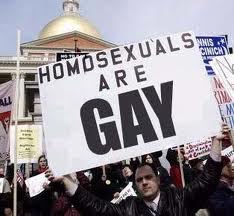
Why I Believe God Doesn’t Want A Gay Lifestyle For Us – #2

If a man has sexual relations with a man as one does with a woman, both of them have done what is detestable. They are to be put to death; their blood will be on their own heads. ~ Leviticus 20:13
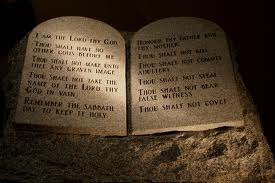
This instruction from God in the law given to Moses (see 19:1) is part of a litany of sexual acts that are forbidden in chapter 20. It’s interdicted right there with adultery, various specifically-described forms of incest, bestiality, sexual relations with a woman during her period — as well as non-sexual proscriptions of child sacrifice, spiritism, and cursing parents.

Some infractions seem to be regarded as worse than others by being associated with words like “dishonor,” “disgrace,” “perversion,” and “detestable.” This last word — rendered “abominable” or “abomination” in some versions — describes homosexual relations.

Yet the punishment is death for disobeying all of the taboos in verses 9 through 13: cursing either parent, adultery, sex with daughter-in-law, homosexual sex, sex with a woman and her daughter, bestiality — this one specifically applying both to men and women.

And this verse simply reiterates and expounds upon what is said two chapters earlier in a similar listing of primarily sexual prohibitions:

Do not have sexual relations with a man as one does with a woman; that is detestable. ~ Leviticus 18:22

I believe God seeks to communicate in the strongest possible terms His disdain for the practice.

I know there are people who believe this is a codification of existing patriarchal mores by Moses. But if that is true, it weakens the case for the incident with Lot and his guests at Sodom as referring solely to rape. It opens the possibility to believe that much more — if not the entire law — was written by Moses rather than given by God and, as the New Testament writers say, put into effect by angels (John 1:17; Acts 7:53; Galatians 3:19). I can’t go there. It was given by God.

We don’t have to go nuts about this.

It’s simply indicative that homosexual relations are not something that God wants for us. He doesn’t make His reasons explicit in scripture, and He’s not required to — least of all by us.

Yes, we have been released from the old law in order to serve in the Spirit, the way of grace (Romans 7:6; Galatians 5). But that doesn’t mean that the old law has lost all power to inform us about what God approves and disapproves; what has weight in the new covenant and what does not. Some things are specifically revoked (required Sabbath observance, for instance; and animal sacrifice). Other things are specifically emphasized (loving God with heart, soul, mind, strength; loving others as self). Still others are specifically reinforced by comparison (giving way to lust in the heart leading to adultery; being angry with another as judgement-worthy as murder).

But I don’t know of anything labeled “detestable” in the old law that suddenly becomes acceptable in the new covenant, no more than I know of anything that was previously permitted in the old law that suddenly becomes forbidden in the new covenant.

God is not human, that he should lie, not a human being, that he should change his mind. Does he speak and then not act? Does he promise and not fulfill? ~Numbers 23:19

As the heavens are higher than the earth, so are my ways higher than your ways and my thoughts than your thoughts. ~ Isaiah 55:9

Nor does He see things the same way we do. We may see some of these prohibitions and wonder why a penalty for transgressing them is so serious — deserving death. (I know I do, especially with regard to cursing parents, sexual relations during a woman’s period, and — yes — homosexual relations.)

But, as I have blogged and defended many times — our understanding is not a prerequisite to faith. God may be able to see harms to us in these things that go deeper than our understanding goes. Do we trust Him to make these restrictions? Or do we demand our own way right now and to be taught the entire knowledge of the universe while standing on one foot?

Of course we’ll have questions. I believe God expects that. But I also believe that he expects us to read His will for us and try to discern His nature from it: meditate, pray, reason, ask for His Spirit’s discernment.

So let’s ask a few:

Does homosexuality threaten the institution of marriage? Probably not at the institutional level, but there are marriages which have ended because one partner chose to end the marriage relationship to pursue the desire for someone of the same sex. The same can be said of heterosexual yearnings for someone besides one’s spouse, and to a much greater percentage. Neither is right, because covenants have been abrogated, commitments trashed, hearts broken, desires for one’s self glorified over God.

Are there lifelong homosexual relationships that put to shame some heterosexual marriages in the quality of commitment and mutual respect? Of course. But that’s not at issue. At issue is the sexual component that seals that relationship. It’s not what God wants for us.

Does God still love someone who experiences homosexual desires? Absolutely.

Can acting on those desires be forgiven? Christ died for all of us, and none of us is free of sin. But to repent of something means giving it up, and God expects us to give up self in order to live a Christlike life.

Is it possible for someone who experiences homosexual yearnings to have a satisfying, God-glorifying life that doesn’t involve sexual relationships at all? I would venture to say that it is just as possible for that person as it is for anyone experiencing heterosexual yearnings. It is as huge a commitment as marriage itself, because it is between a person and his/her God. I think this may be what Jesus is talking about in that enigmatic passage:

For there are eunuchs who were born that way, and there are eunuchs who have been made eunuchs by others—and there are those who choose to live like eunuchs for the sake of the kingdom of heaven. The one who can accept this should accept it.” ~ Matthew 19:12

It must be their own personal choice; no one can make that choice for them. And it’s a worthy choice.

There’s no indication in scripture that Jesus ever chose to engage in sexual activity with anyone; to have done so outside of a marriage relationship under the law would have been regarded as sin by the society in which He lived because it would have been regarded as sin by God. He made that difficult choice. I don’t believe Jesus had supernatural advantage over us in the area of self-control. I do believe that He was tempted in every way just as we are (Hebrews 4:1).

Let me tell you what that means to me.

I can’t tell you that I’ve ever been tempted by homosexual relations. (Okay, a friend made a pass at me once while extremely intoxicated, but it wasn’t the degree of intoxication that made the offer unattractive. It was his gender: the same as mine. ) I’m just not wired that way.

But the passage I cited in Hebrews tells me that Jesus could be tempted in that way, because He was.

To me, that means that He was wired to experience every temptation known to man.

While you and I get at least some degree of immunity from some of them.

To try to understand the same degree of sexual frustration experienced by someone with homosexual yearnings at this restriction, I have to imagine what it would be like if I read in scripture that God did not want me to have a sexual relationship with a woman. The whole notion of it just floors me.

I don’t think I will ever be “cured” of the attraction I feel toward my wife. I have no reason to believe that homosexual attraction is any less strong or less felt than heterosexual attraction.

At the same time, I survived several years of celibacy between my failed first marriage and the one that I hope will be my last and lasting one. I know it can be done. I know that God can bless the single lifestyle with many, many opportunities to serve Him that would be either impossible or much more difficult for a married person. I think that’s what Paul (a single servant of God) was talking about when he said:

I would like you to be free from concern. An unmarried man is concerned about the Lord’s affairs—how he can please the Lord. But a married man is concerned about the affairs of this world—how he can please his wife— and his interests are divided. An unmarried woman or virgin is concerned about the Lord’s affairs: Her aim is to be devoted to the Lord in both body and spirit. But a married woman is concerned about the affairs of this world—how she can please her husband. I am saying this for your own good, not to restrict you, but that you may live in a right way in undivided devotion to the Lord. ~ 1 Corinthians 7:32-35

The point I’m trying to make is that we need to be about what He wants above what we want.

As I’ve said in an earlier post,

I do not know why people have homosexual desires and temptations. Let me add, though, that I also do not know why people have heterosexual desires outside of marriage and temptations of every other kind. I don’t know why some people are born healthy and whole and bright and beautiful — and others are not. I don’t know why some are devastated by disease and accident and divorce and chronic pain and death of dear ones — and others escape some or most of these.

Except that we live in a fallen world, a world broken by sin, and what God asks of each of us is to be part of fixing the breaks and raising the world closer to Him — using the gifts, talents, abilities, time, resources, passion, love, faith and gratitude that He has put into our lives for that purpose.

That is what God wants for us. Each of us. All of us.

Why I Believe God Doesn’t Want A Gay Lifestyle For Us – #1

I tried to be honest with my readers in this post that I don’t believe God wants a gay lifestyle for anyone, and that I would be willing to say that to anyone. I also related what I am sure God doesn’t want for any of us, and that is judging each other. If you’ve read my blog for any length of time, you know the reasons why I’m certain of that.

But I would like to share the reasons why I believe God doesn’t want us practicing a gay/homosexual lifestyle (choose your preferred term), and by that I mean, engaging in homosexual acts/intercourse. I will stick to scripture in this series of posts, and warn you ahead of time that I am not a biblical languages scholar, have not read widely on the subject, and am not interested in being locked into a preconception that I’ve already held. I just want to know what God says in scripture, what He does not say, and what are reasonable conclusions that can be drawn based on that. I’ve tried to keep an open mind on the question, and what I’m sharing is the conclusions I’ve come to.

You need to come to your own conclusions after your own study and prayer and fasting and desert time. You need to, even if you don’t know, care about, love or hate someone who identifies herself or himself as gay. Because you might, and God still loves them, and their souls are as precious to Him as yours.

So here’s reason number one.

Genesis 19. The cry against Sodom and Gomorrah had reached the ears of the Lord (see the previous chapter) because of its evil. Two angels visit Sodom so that the Lord can see for Himself.

Please don’t ask me to explain that. I don’t have a clue. We think of God as being able to see all from wherever He is — presumably heaven — but in this case, He visits by these proxies while He stays with Abraham. Perhaps it has something to do with the severity of the evil that these cries have charged Sodom with committing, and the reliability of two or three witnesses that we find recommended in scripture. Perhaps it has something to do with God’s personal aversion to evil. Maybe His very presence there would have caused judgment and obliteration … before Abraham’s nephew Lot and his household could be rescued. I’m guessing, and only guessing.

What was that outcry God heard? Scripture doesn’t say. Whom did it come from? The Bible doesn’t tell us.

But when the men/angels come to investigate, Lot is at the gate and tries to turn them aside from entering the city/fortress. (Originally, he had camped outside Sodom; it would seem that he built a house with a door there.) He has to persuade them not to spend the night in the square. Why? I think we’re left to draw the conclusion that if they had been ordinary men, they would have been in danger from the evil within.

Instead, the men from all over the city come to Lot’s house and their idea of hospitality is not the same as his. They surround the house and call out to Lot: “Where are the men who came to you tonight? Bring them out to us so that we can have sex with them.”

Some have argued that their initial intent was rape. Okay, I’ll grant that as a possibility. But although there is a term for rape in the language of the scripture as originally written, it doesn’t appear here. They’re just asking. Lot goes out, shuts the door behind him. There’s no indication that he was in danger; he shut the door behind him because the men were asking for his guests. Lot tries his powers of persuasion to dissuade them.

Personally, I think the offer of his engaged virgin daughters is made in jest, perhaps in an attempt to lighten the mood of the tense situation. He calls them his friends. Everyone there knows that their interest is not in his engaged daughters. It’s a tasteless joke, agreed — but possibly a desperate one. When they threatened Lot, the men/angels pulled him inside. Their threat against Lot and his guests at this point has the implied violence associated with rape. At any rate, things went south fast. These men are struck blind, and the next day after Lot, his immediate family and his guests escape before sunrise, fire from the sky (burning sulfur) rains down and completely destroys the city. (His future sons-in-law remained behind, thinking he was joking. Apparently Lot didn’t have a real developed sense of humor.) The refugees are instructed by the men/angels to keep moving; not to look back. It was too much to ask. Lot is granted respite closer than the angels preferred. Looking back at the firestorm destroying her home and doubtless her friends, Lot’s wife is transformed into what is described as “a pillar of salt.”

This fire was “from the Lord.” Did He destroy the cities for the attempt at rape, or the idea that hospitality should include homosexual intercourse, or for more? Well, definitely for more than either or both of those things. Isaiah 3 says that Sodom paraded its sins; the prophet is building on a metaphor that Israel has become as wicked as Sodom and Gomorrah, and names many other sins, perhaps parallel to those of the doomed cities. Jeremiah takes up that metaphor several times, too, against pagan nations. Ezekiel 16 says the sins of Sodom (exceeded by Israel) were arrogant self-indulgence, neglect of the poor and denial of justice. But these sins do not exclude nor negate those recorded in Genesis; they simply supplement and exacerbate them.

My point is that Lot was, in those patriarchal pre-Mosaic Law times, trying to protect his guests from the intrusion of unwanted attention. That attention included the offer of homosexual intercourse. If the guests/men/angels were traveling alone and Lot considered it culturally/morally/ethically acceptable for people to engage in homosexual intercourse, then he would have had no reason to go out and dissuade his friends from making the offer; if the encounter had started as a threat of rape, he probably wouldn’t have gone outside to reply.

That’s my thinking. You’re free to disagree; but this is only one of several reasons I find in scripture that tell me God doesn’t want a gay lifestyle for anyone; the first that touches on the question directly.

(Why didn’t I begin with Genesis 2? Yes, I believe God created man male and female for procreation to take place through sex — and He put pleasure in the mix so that it was also for recreation. Sex is meant to seal a bond of intimacy between man and wife that is described nowhere in scripture as meant for any other relationship. But I consider the phrase “Adam and Eve, not Adam and Steve” to be so trivializing of something deeply sacred, and so belittling and insulting to the intelligence of anyone who has heard it, that I’ve elected not to go there. Only two people existed in the context of these verses; that it speaks of the single complex relationship between them (later known as marriage) is inevitable. Other people would appear later in scripture, and other relationships. The issue in this context cannot be whether a heterosexual monogamous relationship is the only one in which sex is blessed and permitted by God; there could not have been any other because that was the only kind of sexual relationship possible. So the permissibility or blessing of other sexual relationships cannot possibly be in view here.)

Now, once again, perspective: None of us is sinless. None of us is immune to sexual temptation — to temptation generally. As I’ve said in previous posts, our call is not to judge but to love. If we’re going to discuss matters on which we disagree, it must be in love and humility. If we do not wish to be judged, we must not judge.

There is ample evidence that some people have a predilection to prefer same-sex intercourse, and most don’t. A few have no preference. The evidence about why is inconclusive at this point. To say that people choose their innate sexual taste is simply not realistic. But to say that what people choose to do with that sexual preference and how they act upon it is a matter of choice — that is inarguably accurate. And nothing in scripture persuades me that we are judged by God over what tempts us — but that we are judged when we act selfishly, against His will.

My desire in this series is to discern His will in this matter.

I am convinced that He wants what is best for us — all of us.

A Few Kind Words for Ministers and Those Served By Them

Their work is often thankless. It rarely can get done within 40 hours a week. It’s comprised of many hours in hospitals, in counseling chambers, in prisons, in study, in preparation, in prayer, in anguish. It’s called for at any hour of the day when someone in the church family has a need. It sometimes takes priority over the minister’s own family needs. It can challenge the minister’s heart, soul, mind and strength … sometimes all in the same day. Sometimes all in the same hour.

It can take the form of wedding the betrothed, consoling the bereaved, burying the dead, baptizing the penitent, mentoring the willing, soothing the suffering, rejoicing with the triumphant, empathizing with the disheartened, seeking with the seeker, reconciling the discordant, persuading the sinner, teaching the curious, leading the lost, following the Savior — all these and many more.

If your minister’s work is burdening, share it. Help with it. Take on the yoke in the Spirit of Christ and be Him for your minister. Pray for your minister — lovingly, wholeheartedly, deeply, frequently.

Your minister is a part of a diminishing breed of believers willing to shoulder that burden for, usually, much less than could be made ministering in another profession. Cherish that dedication. Recognize the honor it gives God.

Don’t deny your minister the refreshment of silence and solitude … of time away on ordinary vacation … of the fellowship of others in ministry and the opportunities to learn and grow at conferences, workshops, lectures; and to speak to other churches and organizations.

Don’t muzzle the ox while treading out the grain! Pay your minister well.

Remember that your card or letter or even e-mail of appreciation and encouragement can make your minister’s day. A compliment on the sermon is nice, of course, but different sermons reach the needs of different people. Be supportive of your minister’s other ministries, family, personal choices, example.

If you must be critical of your minister, let it be in private and face-to-face. Be critical of yourself first. Examine your motives in being critical. If you disagree with your minister, let it be handled the same way. If you must correct or reprove, do so in love … care … concern. Be willing to accept reproof yourself, humbly and without guile. You could be wrong, and this could be an opportunity for both of you to ferret out God’s will together.

And, because it bears repeating: pray, pray, pray.

Jesus, Syro-Phoenicians and Dogs

ImageI just got in from walking my dog Roadie, and I’m sure that had some bearing on this topic leaping to my mind.

A few days ago, I made the apparently outrageous suggestion in the comments of a Facebook post that Jesus didn’t call people “dogs” in a prejudicial, insulting way in Matthew 7:6 or 15:25-27; rather that He was quoting a maxim of that era to illustrate the pervasiveness of judging others and how wrong it is.

I was immediately shut down with a chorus of “of-course-He-dids” and didn’t have time to defend my contention right then, and the moment passed. So I will now.

First of all, to call someone a “dog” who is of a different ethnicity is completely foreign to the nature of God, who created all men and all ethnicities. To say differently of Jesus — through Whom and for Whom all things were created (Colossians 1:16) — is to declare that the signers of the Declaration of Independence were less bigoted than the Lord when they declared “all men are created equal.” Preposterous.

Secondly, it is not possible for Jesus to have been prejudicial. He could be judicial, because He knew men’s thoughts (Matthew 9:4; Luke 9:47), but not pre-judicial. He could call certain people “a brood of snakes” (Matthew 23:33) because they were children of the great serpent Satan when they were plotting to kill Him (John 8:39-47). It wasn’t like He didn’t know; He did. We don’t have that knowledge, and we are not equipped to judge. He was. But that wasn’t His purpose in coming (John 12:47); that is His purpose when the day set for it comes (Acts 17:37).

Third: “Dogs” was a term of derision in the first century. See Philippians 3:2 and 2 Peter 2:22 and Revelation 22:15. Don’t miss whom these verses talk about, and what they have done or are doing.

They are not about ethnicity. They are about sin.

“Dog” was an insult. In the centuries before, especially in the books titled “Samuel,” the term “dog” is a term of self-deprecation as well as an insult to others, and I believe it is always used as an insult about peoples outside of Israel. Several translators insist that Jesus even softened the term to “puppies” or “little dogs” when speaking to the Syro-Phoenician woman — perhaps lest she imagine real judgment in His tone.

In speaking to this woman and granting the miracle she desires, He refutes what He has said in Matthew 7: He gives a holy gift to someone He has called a “puppy.” How could this not be an object lesson to His entourage, to help prepare them for the idea of the total giving of Himself for all mankind?

Fourth: In Matthew 7:1-6, when Jesus — I believe — quotes this maxim about giving dogs what is holy and giving pearls to pigs, it immediately follows what He has just said about not judging people. If He is not quoting a common proverb as a bad example, then it follows (immediately!) that He was violating the principle He has just given them — how credible is that?

How can we escape the conclusion that prejudice and judging and insulting other people is not Christ-like, and is never something that His followers should participate in?

Finally: Let’s face it. It’s easy to create God in our own image — and doing the same to Jesus is no exception for us. We sometimes want to justify things we want to do by maintaining that He did them in this flesh, in this world. But that doesn’t mean He did them, or said them because it gets us off the hook for wanting to say or do them. We all judge, and we all should not judge. Using the excuse of being like Jesus is no excuse because we do not have all of the authority or capability of Jesus to do so.

Okay. It’s not a Q.E.D., but it is a simpler explanation to me than Jesus saying one thing and then immediately contradicting Himself, and if you respect Occam’s Razor as a sound principle of logic, then I think you’d agree that William would shave with it.

And it certainly is preferable to the theology of a God who called people dogs based on the ethnicity He gave them.

Party of Power; Party of Wealth

I’m afraid that’s how I think of them.

One party believes that the answer to America’s problems lies in giving more power to the people who already have power.

The other party believes the answer is to give more money to the people who already have money.

Each has become so ideologically entrenched that they have both espoused platform planks that are clearly absurd — simply for the reason that they are diametrically opposite to the other’s.

We’ve bought into the easy lie that we can hire someone to fix it all and vote them into office and they’ll fix it all … and those who vie for the money and power have been eager to sell us the lie.

Government ain’t the answer to our problems. A government-free economy ain’t the answer to our problems.

We’re the answer to our problems.

Our faith in each other has been shaken by terrorism, the longest war in our nation’s history, natural disaster and failure to respond well to it, outsourcing of jobs and production to other nations, corruption/cheating/scandal among the power-and-money brokers left unpunished, too many years of exorbitant overspending and digging our nation deeper into debt — on the part of ourselves individually, corporately, and governmentally.

And our economy is built upon our faith in each other. Not in gold. Not in silver. Not even in the solvency of our government or the rates set by the Federal Reserve Bank.

Each other.

If we trusted each other to be willing to work hard; produce good products and services; buy them, pay for them what they are worth, invest in them; pay off our debts; have a long-term economic view toward our assets (including our environment and labor force); educate, care for, mentor and look after those who are disadvantaged; not to overinflate prices in order to generate undue profits … well, we’d have an economy that no other nation and no act of terrorism and no force of nature could unseat.

But we don’t, and we shouldn’t expect to.

Because our economy is based on fulfillment of self-interest, and our government is based on fulfillment of self-interest, and we obviously don’t know what is best for the whole country … only what we want for ourselves. We buy what we want and we vote for what we want, personally, with no particular perception of — or concern for — any larger picture.

As long as we fail to see in current and historical perspective the vision that our forefathers foresaw when they wrote our founding documents and laws … built our nation from raw materials, hard labor, innovation and willpower … repudiated wrongs like slavery and injustice and bigotry … well, we’ll just slog along in the same downhill direction, led by the party of power and the party of wealth blindly squeezing at each other’s throats.

So we can vote like we mean it come November … but as long as we don’t see the vision of America long-term, live the vision like it’s our last best hope, and believe in each other as Americans, it won’t matter one mite which party wins and which party loses.

A Little Sermon for Us

My dear fellow believers and siblings in Christ,

This is a little sermon for us when we need it. “Us” includes me. In fact, I may need you to rub my nose in it later. So don’t forget it. Here we go:

It’s not enough to be a good Christian. If you’ve read my blog for long, you already know I believe that works testify to faith in God’s grace, and together they’re a salvific sandwich (just as a PB&J is not a PB&J without peanut butter, bread and jelly). But I’m not really talking about salvation here.

What I mean is that it’s not enough for the believer to get God’s work done in this world or to become transformed into the image of Christ just by …

  • donating to save the World Trade Center cross
  • affixing a bumper sticker for a candidate who opposes abortion
  • voting Republican (or Democrat; whatever your holy preference)
  • clicking “Like” next to a Bible verse or a picture of Jesus on Facebook
  • listening only to contemporary Christian radio
  • eating or not eating at Chick-Fil-A
  • going to church every Sunday and doing the things you’re supposed to do at church
  • abstaining from things you’re not supposed to do
  • sublimating with things that you can do that seem to take your mind off what you’re tempted to do

You know what I mean. All those things, as Paul says about other practices and rules and human commands and teachings …

“…indeed have an appearance of wisdom, with their self-imposed worship, their false humility and their harsh treatment of the body, but they lack any value in restraining sensual indulgence.”

In other words, they’re not transforming of us. They’re not effective in getting God’s work done in us and for others.

I’m not saying anything that really surprises you, am I?

We all know what Jesus taught and it’s hard to do and we like to downplay or ignore or conveniently forget it when it comes to the difficult job of living His life in this world. We know what He taught, though. He pulled the most important things out of God’s law and emphasized them. He taught things like:

  • “Love the Lord your God with all your heart and with all your soul and with all your mind and with all your strength.” (That’s the goal. None of self, and all of Thee.)
  • “Love your neighbor as yourself.”
  • “If anyone slaps you on the right cheek, turn to them the other cheek also. And if anyone wants to sue you and take your shirt, hand over your coat as well. If anyone forces you to go one mile, go with them two miles.”
  • “Love your enemies and pray for those who persecute you,that you may be children of your Father in heaven.”
  • “Sell your possessions and give to the poor.”
  • “When you give to the needy, do not let your left hand know what your right hand is doing,so that your giving may be in secret. Then your Father, who sees what is done in secret, will reward you.”
  • “If you forgive other people when they sin against you, your heavenly Father will also forgive you. But if you do not forgive others their sins, your Father will not forgive your sins.”
  • “When you fast, put oil on your head and wash your face, so that it will not be obvious to others that you are fasting, but only to your Father, who is unseen; and your Father, who sees what is done in secret, will reward you.”
  • “Do not worry about your life, what you will eat or drink; or about your body, what you will wear.”
  • “Do not judge, or you too will be judged. For in the same way you judge others, you will be judged, and with the measure you use, it will be measured to you.”
  • “So in everything, do to others what you would have them do to you, for this sums up the Law and the Prophets.”
  • “Be perfect, therefore, as your heavenly Father is perfect.”

I’m not going to cite these. You can find them yourself. You know where most of them come from in scripture, but more importantly, you know that they come from the very heart of Jesus your Lord.

I, for one, do not believe He is kidding about these. I don’t think they’re intended to be His laws that we must perfectly do or be forever damned. But I also don’t think they’re just suggestions about nice things to do if we have the time and they don’t inconvenience us too much.

I don’t believe there are any of His instructions to the people He loves that are outdated under the old Law, or no longer beneficial to one’s character, or no longer effective in doing God’s work in this world, or are exaggeration and hyperbole and wink-wink-smirk-smirk because it is impossible for anyone to be perfect.

That’s bullpuckey.

He was.

He’s putting His very heart out there and telling us to make it ours. He’s telling us who He is and whom He can help us become and how. He’s showing us a better life than the lives we’ve chosen, with all of those easy little non-sacrificial doo-diddly-do’s-and-don’ts that may do a tiny amount of good but don’t even come close to getting the job done.

No, they’re not easy. Jesus also said something about taking up a cross and following Him. The cross was not optional equipment for the journey. Doing these things is going to cost us, and cost us dearly — just as doing them cost Him his life.

Yes, they are goals. How can we learn to live the life of Christ in this world if perfection isn’t our goal? Not laws, not suggestions: His loving instructions about making our lives matter in this world, and thereby living out the eternal significance of His life in this world. That’s transformative.

I keep saying “His life.” It has to be His life. He gave His up for us. He’s asking us to do the same for Him … to the blessing of others. Not ourselves.

He’ll see to the blessing of our selves when His time is right.

Okay, that’s my little Sermon on the Blog. We’ve read it. We’ve thought about it. We’ve been made completely uncomfortable by it.

Now let’s live it anyway.

The Morning Walk

When my dog Roadie and I leave the front door behind at 6:05 a.m. for the morning walk, it is just a shade lighter outside than pitch-black. Here in the Nantahala National Forest — a temperate rainforest — virtually every morning begins with the mountains permeated by mist.

The fog is cool and luminescent, providing the only light. As dawn encroaches and the pupils dilate, the sourceless light becomes only slightly brighter. Using a penlight only makes matters worse; like headlights in dense night fog, the result is only brighter fog.

Air is humid and fresh with a thousand scents: conifers, deciduous trees, ferns, wildflowers, mushrooms, molds, decay. Roadie’s nose tells him a hundred thousand things I would never understand. He pokes. He prods. He investigates.

I breathe it in. I walk. I walk by faith; not by sight — because there isn’t enough light to walk by sight. Roadie is simply a pure-ebony smudge in a setting of charcoal grey. I can barely make out his goofy-looking sideways walk when he reaches the end of his leash. Oddly, even the blacktop appears lighter than tree-trunks or leafy plants. It’s a darkness that tells lies about light, but shares sweet secrets about the wild.

Unlike the views from a few vistas on our evening walk, no distant hills or peaks are visible.

But they are alive, because you can hear them. Crickets, at first. A few peeper frogs who have unsuccessfully dragged the mating call on all night down the hill by the stream feeding Scott’s Creek. Occasionally, the sound of a rig downshifting to climb the hill on distant 441; or a sleepy driver wandering momentarily onto the rumble strips at the side of the pavement. Once in a while, the notes of the first-awakening songbird of the day.

Before the day begins, the world is new. The morning’s bad news has not been seen yet on the television or in the newspaper on the front walk. The tweets and facebook posts of loneliness, pain, stupidity, regret, anger and orneriness have not yet been read. The uncultured wails of country, rock or rap have not yet been heard on the car radio.

Each day has a chance.

Each day has potential.

Each day has a warm, waiting home with sleeping, loving family still tucked cozily under their covers at the end of the return trail.

The woodland light continues to brighten as Roadie and I pause so I can close the front door behind us to grind the beans and perk the coffee.

Whatever the day brings, each day is going to be a good day.

We’ve decided, Roadie and me.

A Spirit-Filled Church

Do you worship with a church that is primarily concerned with getting it right and doing it right and not doing something wrong?

A church that is a little afraid to do anything because it might not be directly authorized by scripture and might be wrong?

Do you gather with saints who speak mostly of duty and law and authority and judgment?

You’re not alone, and there are many more like you who yearn to be free to worship every day.

Here is something you are free to do and it’s authorized by scripture:

Pray for your church.

Jesus prayed for His church, with some of the last breaths He took as a mortal (John 17).

Paul prayed for the churches in Rome (Romans 1:8-10), Ephesus (Ephesians 1:16), Philippi (Philippians 1:4), Colossae (Colossians 1:3), Thessalonica (1 Thessalonians 1:2),  He prayed for them constantly, always, without stopping — those phrases characterize his descriptions of his prayers for them.

Pray that your fellow believers will receive the Holy Spirit, and receive power and wisdom through Him, just as those in scripture did (Acts 8:15; Ephesians 3:16; Colossians 1:9).

Pray in the Spirit (Romans 8:26; Ephesians 6:18; Jude 1:20).

Pray in faith (Matthew 21:22; Mark 11:24).

Pray boldly to be able to speak boldly. Pray for God to stretch out His hand. Pray for your church to be shaken (Acts 4:23-31).

Ask for the Holy Spirit for yourself, as well (Luke 11:13). He is a promise made to you (Acts 2:37-39).

Then have the courage to start being the answer to your prayers (1 Corinthians 16:13).

It’s important! Vitally, crucially, eternally important!

And if anyone does not have the Spirit of Christ, they do not belong to Christ.But if Christ is in you, then even though your body is subject to death because of sin, the Spirit gives life because of righteousness. And if the Spirit of him who raised Jesus from the dead is living in you, he who raised Christ from the dead will also give life to your mortal bodies because of his Spirit who livesin you.” ~ Romans 8:9-11

If you can’t see words in scripture that say the Holy Spirit of God and of Jesus Christ is now just a passive, passe, common enthusiasm like the “Spirit of St. Louis,” then it’s not true.

If you can’t see words in scripture that say the Holy Spirit is now just present in you only through your reading of scripture, then it’s not true.

If you can’t see words in scripture that say the Holy Spirit will stop living within, working within, comforting from within, empowering from within, then it’s not true.

If you can’t see words in scripture that say the Holy Spirit “living in you” is just a metaphor; just a simile; just a manner of speaking, then it’s not true.

No matter how many times you hear it; no matter how loudly it’s repeated; no matter how hard the pulpit is pounded when it’s said, it’s not true.

It’s a lie. And it’s from Satan. And it’s designed to de-emphasize, demoralize, and de-energize the church that Christ died to empower with the gospel of truth: the Spirit is His free gift to us, and through that Spirit, life without end.

That life begins in the here-and-now; a life that lives in Christ, for Christ, through Christ by the power of His Spirit living in you.

The utter, plain, inarguable truth of that is the reason that Paul could claim:

I have become its servant by the commission God gave me to present to you the word of God in its fullness—the mystery that has been kept hidden for ages and generations, but is now disclosed to the Lord’s people. To them God has chosen to make known among the Gentiles the glorious riches of this mystery, which is Christ in you, the hope of glory.

He is the one we proclaim, admonishing and teaching everyone with all wisdom, so that we may present everyone fully mature in Christ. To this end I strenuously contend with all the energy Christ so powerfully works in me. ~ Colossians 1:25-28

If you want to worship with a Spirit-filled church, be a Spirit-filled person.

Let it begin with you.

Stand for the truth.

Scholars, Logic, Faith, and Making Sense

I have as much respect for biblical scholars, theological thinkers and ancient language experts as anyone else. Great men are great men. Great women are great women. But opinions are also opinions, which means that great scholars’ opinions are just great scholars’ opinions.

And, obviously, when something doesn’t make good sense … well, then it doesn’t good sense, whether it’s a great scholar’s  opinion, or yours, or mine.

I don’t believe God breathed inspiration into scripture with the overarching intention to confuse us and conceal His will for us, or to make it the private authoritative domain of biblical scholars. Their expertise can certainly help, but of all people, scholars who teach should know the difference between fact and opinion and be able and honest enough to distinguish them.

Our purpose cannot be to defend the historical interpretations, doctrines and opinions of scholarly men and women without question – however great, intelligent and faithful they might be or might have been.

We’re not responsible for their reading of scripture or their knowledge or their faithfulness, but of our own — and how we live accordingly.

Our purpose must be to seek Truth, for in doing so we seek Jesus who is also the Way and the Life. And through Him we seek the Father, our God.

“Do not quench the Spirit. Do not treat prophecies with contempt but test them all; hold on to what is good, reject every kind of evil.” – 1 Thessalonians 5:19-22
That said, when seeking to make sense of scripture that seems perplexing:
Logic has its place in Christian thought. But it’s not first place.

Faith has first place.

Because logic is what tells you not to believe when you see or hear something impossible. Logic is what tells you, “That’s impossible! I can’t believe that. That did not just happen!”

Yet it did.

So faith comes first, and we all know what faith is: “Faith is believing when common sense tells you not to.” (My scripture text is “Miracle on 34th Street” by Valentine Davies, of course. However, John 20:24ff or Hebrews 11will do nicely, too.)

Now, logic will help you sort out what you have/have not seen or heard, and what is or isn’t possible. It will help make sense of that which does not immediately make sense. But it must work within the context or framework of faith.

We believe in gravity, mass, air, airless vacuum, love, justice, mercy and courage though they are invisible. We believe because we see their effects. Logic tells us there must be a cause for these effects, and faith puts a name to each cause because we believe it must exist.

They work together.

But faith first.

Logic later.

(First published on Facebook in two parts, 8/11/12.)

Homosexuality: We Don’t Know What We’re Talking About

Wow, He Really Knows What He's Talking AboutGive the word a Google: homosexuality. Look it up in dictionaries. Seek out its etymology.

As a word, it’s not that old; just a little over a century.

And the definitions differ. Some describe attraction or desire as well as activity or intercourse … and others don’t. Plus, in the past few generations, the distinction has been blurred with the addition of the word “orientation,” and the word “gay” as a preferred description.

In short, when we talk about it … we don’t know what we’re talking about.

Not exactly.

And when believers talk about it, and the use of the word in newer translations of the Bible, we especially don’t know what we’re talking about.

Since the word was coined a little over 100 years ago, you won’t find homosexual or any of its daughter-words in English translations older than that.

As an adjective it does, in practice and fact, describe both desires/feelings/attractions and actions/intercourse.

As nearly as I can tell, what the Bible speaks of is — in the original languages Greek and Hebrew — actions between individuals of the same sex, specifically male (as much of scripture is, having been written in eras of patriarchal prejudice), and the wording is “man on man.” This isn’t talking about conversations mano a mano or a type of basketball defense. It’s talking about sexual activity, not desire, and it’s talking about something that does not please God.

Let’s not go crazy about this. There are about four or five times the concept comes up in all of scripture. God just doesn’t like it. He didn’t like it in the era of the Old Testament and He doesn’t like it in the era of the New Testament.

In the interest of full disclosure, I am no Greek or Hebrew scholar nor do I play one on TV. That’s why I said, “As nearly as I can tell.” You need to research the matter for yourself; I’m not going to try to condense mine here because it defies abbreviation. Look up the terms used. Look up the scriptures in which they’re used. Look at the parts of speech that are used, and the (no pun intended) conjugations used in the phrasing of the verses. Look at what it means, and if you have to put aside something you have been taught that it means in order to do so, then be brave enough to take God’s word over man’s.

I’ve looked into this as deeply as my brain knows how, for more than the number of years since I wrote The One Where I Just Lose. I’ve come to these conclusions after years of study, prayer, and love for people who are troubled about it. You need to reach your own conclusions, however long it takes and however much it hurts.

I don’t know the reasons why some people feel homosexual attractions or feel them so strongly. I haven’t experienced them, and as much as I would like to be able to sympathize, I simply can’t.

But I can see no evidence in scripture that having those desires or being tempted by them is a sin, or sinful by its nature, or something that causes one to be damned.

It is in acting on tempting desires that displeases God, not in being tempted by them. That’s true of heterosexual desires outside of marriage as surely as it is of homosexual desires. Activity can include choosing to gladly host wholesale lust until acting physically on it is almost inevitable — and in the meantime, the heart meant for God has been turned inward toward self and the conscience almost irrevocably seared.

There are all kinds of sexual behavior and choice that are displeasing to God. Some are more harmful than others; some are downright depraved; a few are even murderous and I don’t even like to think about the fact that they exist.

Probably consensual homosexual activity is one of the socially least harmful of these; and as society sees things currently, consensual homosexuality carries almost no perception of harm.

That doesn’t mean that it’s pleasing to God, or that He wants it for anyone. So there is a harm: it’s in the fact that homosexual activity (and other sins, sexual and otherwise!) will never be something that God wants for us; He wants something better for us. That may be marriage. It may be celibacy.

I hate to be so stark about it, but scripture doesn’t really describe any other good alternatives. Both can be rich gifts from God and powerful lifestyles through which He is served and glorified.

There are alternatives, of course; but they are not good and do not particularly serve Him nor glorify Him. They may serve the desires of self very well, but unfortunately that means that they may very well serve the purposes of the accuser, Satan, too.

God wants better for us. God wants more for us. God wants Himself for us. I have no shame in telling any of my dearly-loved friends this, no matter what they are tempted by or how powerfully their desires draw them. I need to hear it myself, and often, from fellow believers when my will falters and my desire for God withers.

He made us. He knows what is best for us.

All we know is what we want.

Let me reiterate that I do not know why people have homosexual desires and temptations. Let me add, though, that I also do not know why people have heterosexual desires outside of marriage and temptations of every other kind. I don’t know why some people are born healthy and whole and bright and beautiful — and others are not. I don’t know why some are devastated by disease and accident and divorce and chronic pain and death of dear ones — and others escape some or most of these.

Except that we live in a fallen world, a world broken by sin, and what God asks of each of us is to be part of fixing the breaks and raising the world closer to Him — using the gifts, talents, abilities, time, resources, passion, love, faith and gratitude that He has put into our lives for that purpose.

Not our purpose. Not the accuser’s purpose.

His purpose.

So what does a believer do to be a part of God’s plan to reconcile the world to Himself through Jesus, the Christ, the Son of the living God?

Stop judging others.

Love others deeply.

Keep oneself unspotted.

Stop trying to legislate others out of sin. Sin is not a matter that law can handle. We spent a whole testament of scripture proving to God how that doesn’t work, just as if He didn’t already know it.

Sin is a matter of the heart.

Don’t be afraid to tell someone you love that “I think God wants something better for you than what you’ve chosen. I think He wants something better for me than judging other people, and I have a terrible struggle with that. I think He wants better for both of us.”