What Really Matters

I know this was the theme of the recent New Wineskins July-August edition edited by Sara Barton, but it also happens to be the title of the new Web site (reallymatters.org) launched by Mike Cope and Landon Saunders of Heartbeat (heartbeat.org).

(Now, I would suspect collusion between Mike and Sara, since they have put their heads together to produce such presentations as “Women, Gifts and the Body of Christ,” but I’m convinced they’re above that sort of thing.)

The new site is designed to provide resources for initiating and engaging in discussions with folks about, well, what really matters.

But let Mike give you a sample himself:

Three Thoughts at the Table

John Mark Hicks always challenges me – and especially when it comes to the subject of the Lord’s Table. In this short but outstanding series of “Table Reflections” posts, he pictures Jesus as meal, maitre d’, and waiter there:

Don’t miss out on this feast!

The Egg and Me

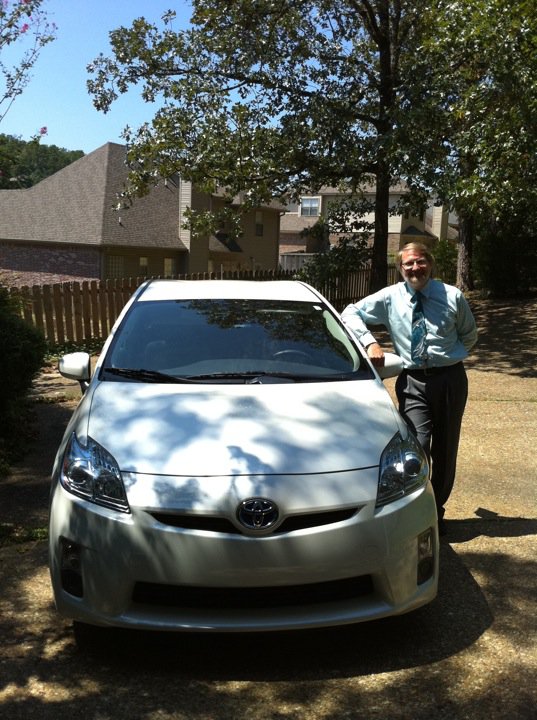
I bought a used 2010 Prius just a few weeks ago. It’s white and shaped like an egg, and I’ve already begun thinking of “The Egg” as a nickname for it.

Don’t misunderstand; I love my new car. I’ve wanted an electric car since my environmentally-conscious teenage years in the 1970s, and a hybrid is the next-best (affordable) thing right now.

But I’ve already learned some disturbing things about myself just driving it these last few weeks.

  • I have tended to rocket between stop signs in my pre-Prius years. Not just on the road, but in life. Perking along in The Egg – with an eye to the “ECO Mode” readout on the dash – I’ve learned that easing up to the speed limit and sticking to it gives me time to actually see where I’m going, as well as watch it. This is a good thing, since I had to buy a car to replace the nine-year-old minivan that I wrecked while not paying full attention to where I was going. And I have time to think about where I’m going in life, too … drive time is a good time to reflect on that. Life should be a journey as well as a destination. Getting there should be half the fun.
  • I have also tended to take unnecessary risks to get ahead. Yes, also not just on the road, but in life. Shrieking tires to gun out ahead of someone else is really difficult to do in a Prius (0-60 in 11.9 seconds – not exactly comparable to a Lotus). I’ve had cause to think about just why it is important for me to get ahead in the first place. When it’s not a possibility, I don’t have to uncork the adrenaline worrying about doing it, and I am a less-stressed, safer person to be around. In many ways. All I have to do to quell the temptation to take a foolish risk while driving is to picture a scrambled Egg.
  • I’ve wasted a lot of fuel – and money to pay for it – without really needing to, in the past. (Okay, no unkind remarks about my expanding midsection, please. But I am no longer going to shrug that off by remarking, “I’m just growing as a person.”) I rough-calculated this morning that if I continue to get twice the gas mileage with the Prius that I got with my old car, drive about the same number of miles, and keep it a little longer – say, ten years – and if gas prices remain steady, I will have saved about half the cost of my car in fuel expenses. If gas prices go up, I will of course have saved more – or that amount sooner.
  • I am addicted to comfort. My Prius is heavy for its size (two engines; big battery array) and gives a great ride; it has a very ergonomic interior, soft (heated) leather seats, an adjustable temperature setting that I can set with buttons on the steering wheel, bluetooth access to my cellphone with an answering button on the steering wheel … the options list goes on and on. I didn’t have any of that stuff in my old car, and I would miss it badly if I had to go back. It’s excessive. I had no intention of spending as much as I did – or even buying a Prius this new – but I had no objection when it was the one Angi really liked.
  • Jesus would probably not drive a Prius. Okay, this is just purely speculative. My car has some good points, and it may be more economical and in some ways environmentally-friendly than many of its companions on the road, but there are still some realities to face. At the end of its lifetime, I will probably have to pay a fee to dispose of that battery array. It still uses a (low-emissions) gasoline engine, which produces unfriendly hydrocarbons, and consumes petroleum as fuel. But far beyond those concerns – which might or might not concern the Savior – it isn’t walking. Jesus walked. A lot. It put Him among people; people who needed His touch in their lives. So I’m planning to walk more. I can walk at lunch time; there are plenty of nearby eateries where I can hold doors for fellow diners, smile, engage in conversations that almost always will include where I work (at my church) and possibly why.

Well, that’s just a little sample of what I’ve learned about me while driving The Egg.

I think it’s helping me approach life with an attitude that’s a little less hard-boiled.

Blogging Sabbatical

After a 25-year absence, my carpal tunnel syndrome has returned with a vengeance – and this time in both arms.

So I’m cutting way back on my tweeting, facebooking and blogging.

I can just about get through a normal day’s work at the keyboard without hitting my pain tolerance limit, and that means limiting my extracurricular keyboarding and even my detail-intensive model railroading.

I’m also in a holding pattern for a couple of weeks while some blood tests and an EEG are analyzed after a bit of an episode several weeks ago in which my left arm/hand and left foot/calf started to swell, turn blue, experience intense pain, and then just as suddenly returned to normal a few minutes later. I was a bit disoriented – not thinking at my best – and instead of going to a doctor, napped it off.

I’m hoping it was a one-time thing, and nothing serious.

And that I can get back to my social nit-witting soon.

Speaking for God

“We speak where the Bible speaks, and are silent where the Bible is silent.” ~ unofficial motto of (most) churches of Christ.

“Lord, fill my mouth with worthwhile stuff – and nudge me when I’ve said enough!” ~ prayer of the probably mythical old preacher

“If anyone speaks, he should do it as one speaking the very words of God.” ~ 1 Peter 4:11a

Isn’t this one of the heaviest burdens carried by those who truly desire to speak for the Lord? Whether preaching, teaching, writing a blog, or just conversing about matters religious with a friend?

How do we know when we’ve stopped speaking for Him and started rattling off our own perceptions about what He’s said?

Isn’t it pretty important to stick to what He’s said?

And after all, aren’t there plenty of powerful speakers with advanced degrees in biblical studies who don’t agree on what He’s said?

I wonder from time to time if this doubt isn’t one of the most powerful tools Satan has in shutting us up about the Savior. I wonder if it’s one of the un-discussed root causes for preacher burnout and parishoner abandonment of evangelism.

I wonder if we’ve made the gospel more complex than it is.

Would you like to know what gives me hope when I try to write or speak on the Lord’s behalf – however imperfectly, humbly, and haltingly?

“Therefore I tell you that no one who is speaking by the Spirit of God says, ‘Jesus be cursed,’ and no one can say, ‘Jesus is Lord,’ except by the Holy Spirit.” ~ 1 Corinthians 12:3

“Then Peter, filled with the Holy Spirit, said to them: ‘Rulers and elders of the people!'” ~ Acts 4:8

” … for it will not be you speaking, but the Spirit of your Father speaking through you.” ~ Matthew 10:20

The Spirit of our Father speaks through us. We just leave it to Him. It happened just as Jesus described it to His followers. And Paul writes to Corinth that it still works that way. It’s a simple message (“Jesus is Lord!”), delivered in a simple manner, through simple people like you and me. No advanced degrees required; just the Holy Spirit speaking through us.

And all we need do is ask for His help.

“If you then, though you are evil, know how to give good gifts to your children, how much more will your Father in heaven give the Holy Spirit to those who ask him!” ~ Luke 11:13

You can even ask for that help to be given to others:

“I keep asking that the God of our Lord Jesus Christ, the glorious Father, may give you the Spirit of wisdom and revelation, so that you may know him better.” ~ Ephesians 1:17

“For this reason, since the day we heard about you, we have not stopped praying for you and asking God to fill you with the knowledge of his will through all spiritual wisdom and understanding.” ~ Colossians 1:9

I have resolved to take a new approach when disagreeing with others about scripture, or when trying to argue toward a common understanding of God’s message, or whenever I feel compelled to speak for God. I’ve resolved to pray for the Holy Spirit’s discernment for all parties involved, including (especially!) myself.

I can be as opinionated and pig-headed and closed-minded as anyone else I know. I need to be more open-minded … no; not so much that my brains fall out, but so much that His Spirit can fall upon me. I need to make room for God’s understanding, even if it pushes my understanding out through my nose and ears.

So I’m asking you to pray the same thing for me.

Other Fellowships’ Phrases

We avoid them like the plague, don’t we?

Which makes me wonder if there are Restoration Movement Christians who have been baptized by immersion, but have never really asked Jesus into their hearts … because that was some other fellowship’s phrase.

Of course, it’s also Paul’s phrase (Ephesians 3:17), and what Jesus encourages us to do (Luke 11:13).

And I wonder if there are Christians who have asked Jesus into their hearts, but have never been immersed into His life – as well as His death, burial and resurrection in baptism.

Those are phrases of Paul, too (Romans 6:1-6).

I wonder, also, if there are those who are saved, but have never heard a heavenly calling to a holy life; to God’s purpose (2 Timothy 1:9; Ephesians 4:1; Hebrews 3:1; 2 Peter 1:10) – because those phrases just aren’t in their vocabulary.

I have to wonder if there are followers of Christ who wouldn’t know what to do if a word from the Lord came to them (Jeremiah 37:17; 1 Samuel 15:10), or felt a burden God had laid on them (Ecclesiastes 3:10; Matthew 11:30), or were moved to participate in a sinner’s prayer (James 5:15-16) – for the reason that these phrases just aren’t written in their book.

Or they are written there, but they haven’t seen them for what they are.

I wonder if the proprietary phrases indicate our willingness to see and follow only part of God’s entire purpose for us; if they betray our unwillingness to see and be blessed by a whole gospel and a full fellowship. I wonder if these shibboleths serve to separate us, keep us apart, prevent the blessing of unity in the Spirit and the bond of peace between Christians who each adhere to his/her own distinct doctrines and subcultures and groups and sects and cliques and lingo and phrases.

Most of all, I wonder if I’m one of them.

Facts Don’t Persuade Us

Hat tip to Phil Wilson who tipped me off via Facebook this morning to this Boston Globe online article, “How Facts Backfire”:

http://www.boston.com/bostonglobe/ideas/articles/2010/07/11/how_facts_backfire/?page=full

The research described by the article confirms what most of us have suspected, I think, for a long time: that facts don’t persuade us. We accept the facts which support what we want to believe, and ignore or distort reported facts in order to conform with what we want to believe. And some of us – who have reached a really deep level of dishonesty with self – misreport or lie, inventing items which we portray as factual.

These ways we deal with facts affect the way we vote, the studies show – which does not bode well for our country.

More than than that, they affect the way we handle our businesses, our interactions with others, our lives and – you know it’s true – our faith.

It’s not a new phenomenon. Jesus had to refute it in Matthew 12:22-45, where Pharisees reinterpreted the fact that He had just exorcised a demon from a man who regained his sight and speech by saying: “It is only by Beelzebub, the prince of demons, that this fellow drives out demons.” They didn’t try to controvert the obvious fact that a demon had been exorcised. They just “put a spin” on it that conformed with what they wanted to believe about Jesus.

His response included some of the straightest talk ever about a house divided against itself, and the consequences of blaspheming the Holy Spirit – which I believe to include crediting the wondrous, beneficial and miraculous acts of the Spirit to Satan and his minions; in essence, calling His good “evil.” He calls it an eternal sin “which will not be forgiven.”

(Let’s remember that, the next time we’re thinking about bad-mouthing someone who claims to have an extraordinary experience and can’t help but wonder if it was God’s touch in their lives, shall we?)

Our resistance to facts which challenge our beliefs is bad news – not those facts themselves. In a society which largely no longer knows the difference between a fact and a premise, cannot distinguish inductive from deductive logic or exhorted knowledge from experiential knowledge from empirical knowledge, knows little to nothing about logical fallacies, has little regard for the balance of passion with reason – this can be disastrous news.

What bothers me as much as anything else – or more – is that I occasionally catch myself resisting the facts.

And that I should probably be catching myself more frequently when I do it.

At What Point Are We Saved?

This question, perhaps above all others, has caused contention and division within the body of Christ – His church – for the better (or worse) part of two thousand years.

Are we saved at the moment we believe? The moment we repent? The moment we confess Christ as Son of God? The moment we are baptized? The moment we receive the Holy Spirit?

It’s important to those who want to be contentious and divisive because the moment at which one is saved may be the key to which aspect of our salvation they wish to promote above all the rest – as if one were more important than the others; or as if the steps along the path toward God in Christ must be taken in a certain order; or as if taking a certain number of steps is all up to us and does not involve grace at all until after we alone have taken them ….

It’s important to them so they can establish their own beliefs as uniquely right, correct, and holy – and their own fellowship sharing those beliefs to be uniquely approved by God and saved, and all others heretical and condemned to hellfire.

May I suggest that Jesus describes the moment we are saved in Matthew 25?

That it’s the moment when the Master, the King – when Jesus Himself – either says “Well done, good and faithful servant!” or “Throw that worthless servant outside into the darkness!”?

That it’s the moment when HE decides, not when WE decide?

That it’s the moment culminating all the moments between “the hour I first believed” (Amazing Grace) and “the hour of my departure for worlds unknown” (Be With Me, Lord)? All the decisions we have made; the choices we’ve chosen; the steps we’ve taken; the acts of obedience and gratitude and trust in His grace that we have shown – all in partnership with God and Christ through the Holy Spirit?

That’s what I’d like to propose.

So, am I suggesting that we cannot know until then whether we are saved?

Yes, that is exactly what I am suggesting.

However, the fellowship of the Holy Spirit is our seal of redemption (Ephesians 1:13; 4:30); we can approach God with confidence by the blood of Christ (Ephesians 3:12; Hebrews 10:19).

We believe that grace is real, and that is called faith not knowledge.

Through faith we are saved:

For it is by grace you have been saved, through faith—and this not from yourselves, it is the gift of God— Ephesians 2:8

… and that faith itself is not even wholly our doing; it is the gift of God.

So, am I suggesting that we have nothing to do with the process?

No, not at all! Our willingness to extend our faith – to believe, to stop pursuing evil and self and begin pursuing good and God, to confess His Son for Who He IS, to immerse ourselves in the water of living His life in this world by the power of His Holy Spirit – is absolutely essential to a salvation that begins in this life and never ends. As we receive His grace, we extend it to others; become channels of that blessing to those around us. We feed the starving; give water to the parched; show hospitality to the homeless; look after the sick; visit the imprisoned. We demonstrate that God cares about the whole person; in this life as well as the next.

That point of view takes the emphasis off of a minimalistic “five-steps-and-you’re-done” salvation. It restores the fullness of the gospel lived out rather than just intellectually acknowledged in a reduced-calorie recipe for redemption which has no salvific value at all if not demonstrated daily instead of displayed once on a Sunday in a church and fondly recalled as the-day-I-was-saved-so-that-now-I-can-go-back-to-living-the-life-I-want-to-live. That may be the moment our salvation begins, but it is certainly not the be-all-and-end-all of it.

I have been crucified with Christ and I no longer live, but Christ lives in me. The life I live in the body, I live by faith in the Son of God, who loved me and gave himself for me. ~ Galatians 2:20

We can have absolute confidence – faith – in what Christ has done, even when we have lost faith in the flesh and in checklist-salvation and even in ourselves; our own ability to be-good-all-the-time-and-do-all-the-right-things-and-believe-all-the-correct-beliefs-and-obey-all-of-the-church-rules.

One more time: it is our faith in Him which saves us; not in ourselves.

But remember: it was His faith in us which led Him to the cross on our behalf.

And that deserves our whole-hearted, life-long response of faith, gratitude, and worship. It means being prepared, with lamps expectantly trimmed. It means knowing the Master’s desire for a return on his investment, and His faith in us as re-investors of the deposit He has made on our salvation. It means that faith-in-the-living separates the sheep from the goats.

That kind of service will bear fruit for His kingdom, bring others and ourselves closer to Him – and it will not go unrewarded; it will inevitably lead to the moment we are saved.

That’s the message of Matthew 25.

You can have confidence in it.

Ambition

I didn’t realize that The Andy Griffith Show had impacted my subconscious so deeply until I woke up this morning and remembered dreaming about ol’ Andy Taylor sharing a story with Opie’s class after school:

“I do enjoy fishing. And most of you have heard stories about big fish. But I want to tell you about the smallest one. He’s a striped bass, and I named him ‘Ernest T.’ after an acquaintance of mine, because he is not only the smallest fish in all the lakes between Mayberry and Mount Pilot, he’s the orneriest. He dashes for the bait on the hook before all of the other fish. He has a real ambition to get caught, and I’ve obliged him about a dozen times. I’ve always thrown him back, though, until this morning. This morning I couldn’t deny him any longer. I caught him and kept him and cooked him and enjoyed him for breakfast. They wasn’t much of him, but that fish was delicious. I s’pose if they’s any moral to this story, I guess it’s that sometimes when you oblige other folks in their ambitions, it turns out better for you than it does for them. And, of course, you should choose your ambitions wisely.”

I don’t remember whether I dreamed in black-and-white.

If I May Be So Bold …

It’s a line from a Star Trek movie. (Big surprise, huh?)

Specifically, Star Trek II: The Wrath of Khan, when Captain Spock’s meditations are interrupted by his C.O., Admiral Kirk – who is apologetically pulling rank to divert Spock’s ship to a crisis. Spock insists that he assume command. Kirk declines. Spock replies:

“If I may be so bold, it was a mistake for you to accept promotion. Commanding a starship is your first, best destiny; anything else is a waste of material.”

We all need – and deserve – a friend who will be painfully honest with us; who will point out to us our possible lapses in judgment – even our career choices – and be confident that the friendship will survive it.

We all need friends who are familiar enough with human courtesy to introduce their opinions with “If I may be so bold …” Even if there is no difference in rank, or race, or blood, or belief. Or if there’s a world of difference.

And we all need to be such friends to others.

What might happen if we as believers in Christ gently confronted some of our friends with a mildly-stated opinion, like:

“If I may be so bold, you seem restless; unsatisfied in your career choice ….” “… your current relationship ….” “… your spirituality ….” ?

Or asked, “Do you ever feel called to a life that is more than what you’re living now?”

Or went for broke and said, “Have I ever told you that I care about your soul as deeply as if it were my very own?”

Or even went further and admitted, “I think the choice(s) you’ve made are mistaken, taking you somewhere you may not really want to go.”

I know; I know. That’s meddling. But that’s what we’re called to do: Meddle. Not judge people, but judge their actions. Not love all their actions, but love people. We get that so mixed up sometimes.

– If I may be so bold as to point it out.