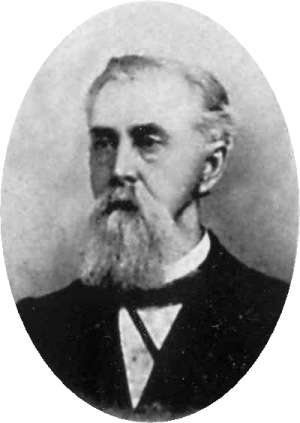
 I’m coming to terms with my heritage in Churches of Christ through the person of my great-great grandfather Alfred Ellmore, one of the early preachers in the Restoration Movement that yielded this fellowship. This is an installment from his 1914 book Sermons and Chimes, and my reactions to it in the form of a dialogue with him:
SERMONS
THE BIBLE.
The Bible is a finished book; it will admit of neither addition, subtraction nor change. No other book has such resources as the Bible. Each author has had full privilege to say all he wished to say, and therefore the book is complete. On this point the following summary is submitted. God in this book is heard, and has said all he wished to say, or to have said. Christ, both before and after his death, has said all he wants to say. The Holy Spirit, through men, is fully heard, good men uninspired have been heard, wicked men have been heard, the prophets have been heard, and the Arch-Deceiver once had an encounter, face to face, with the Master. All these have had impartial hearings, and wish to say nothing more. Now, if any man wish additional revelation, who would make it and what could he say?
I think I’ve been misunderstood in my answer to this question, dear ancestor, and I have no great desire to interrupt the flow of your thought, but … The Holy Spirit might well desire to make additional revelation and what He could say to and through people would be up to Him. But it might well take the form of personal direction or information (Acts 16:7), a warning (Acts 20:23; 21:11), or to inspire a realization of the blessed Lordship of Jesus, the Christ (1 Corinthians 12:3). These are revelations that are not supplanting, but supporting; not replacing, but reinforcing; not rescinding but reminding. I would not rush to say that His work is over and done.
There is no book in the world over which there has been as much debate and contention as has been over the Bible. And there is no room for another divine law. Its divinity has been discussed, upon by both sides, by as able controvertists as the world has ever had.
But because of the great controversies many reject the Bible. But are there not as great differences between men in other callings? Take men in the medical profession, and in the law, and over capital and labor, and we find in all these callings men who differ, and they are at sword’s points, each contending fore his dogma and his party. And while right and wrong are in the world, there will be religious differences. And while all acts pertaining to men’s duty are made plain in the Bible there is in it a depth, and a height and a breadth which no human mind can grasp. If all the mysteries in the Bible could have been solved, the book would have lost its interest many centuries ago.
But that the tyro may know that the Bible is super-human, take the following:
1. The Bible knows the past, the present and the future alike, and never makes a mistake as to date. It knows our course tomorrow as well as yesterday, our line to the grave as well as to our cradle. It gives a true history of our ancestry back to Eden. But it gives a minute history of the world for 4,000 years before Christ. And in recording events in history, behold the writers were giving prophecy for the future, and if these prophecies could be properly explained, their fulfillment would be as accurate as is the needle to the pole. But please turn to the future. The Bible lightens up the grave and gives assurance of the day of judgment, and when all the evidence is brought in, each part will fit into its place as the wheel fits into a perfect machine.
Great-great Grandpa … this 4,000-year reckoning of time, of course, depends solely on the research of Bishop James Ussher, whose chronological estimations were often included in the center margins of two-column commentary King James Version Bibles in your era, weren’t they? Especially the Scofield Reference Bible?
2. It advocates every pure thought, and every pure word, and every righteous deed performed by man. On the other hand, it condemns every licentious thought, every idle word, and every wicked act of man.
3. We dare not add to this volume nor take from it. “If any man shall add unto these things God shall add unto him the plagues which are written in this book, and if any man shall take away from the words of the book of this prophecy (Rev.) God shall take away his part out of the book of life, and from the holy city, and from the things written in this book.”
For near 2,000 years men have been legislating and forming laws and creeds for the supposed benefit of man, but no one man nor body of legislators have been found who could add even the eleventh command to the decalogue.
4. All other books, whether of history, of law, or of prophecy, when read once, or at most but a few times, lose their interest, and we keep them merely as books of reference. We have read them and exhausted their fountain. Not so with the Bible. We read it day by day, and chapter after chapter, and it is still the inexhaustible fountain to us.
5. It has been killed, and burned, and its funeral has been preached ten thousand times, but it rises up out of its ashes and haunts its assassin to the grave, and the more he opposes it the worse it troubles him. And in that sad hour which awaits all opposers of the blessed volume, the smoke of their sins will rise in awful density, until their lights will go out into eternal night, while the men of faith pass down into their graves with a halo of peace encircling them, into the palace royal of the universe
It is now about 1,900 years since the book was finished, and it has stood the storms of persecution, and it is gaining victories more wonderful than ever before.
But whether we shall ever be able to account for the book, one thing is certain, the book is here, and it is very much alive. And if we refuse to let it give its own origin, how shall we account for its advent into the world? It is not a product of nature, for nature reproduces of her kind. It is not spontaneous, it did not just happen. Being a book of so much intelligence shows that it is the work of effort, of intelligence.
Well, did men — good men — of themselves, create the book? No, the authors who wrote claim they were moved to write by a higher power. We should not assign to men a work they claim not to be the authors of. But have bad men produced this book? Then, pray, what was their object in writing such a book, since from first to last it condemns wicked men, and seals their death warrant on almost every page? No, good men who wrote say they were moved by the Holy Spirit, and since God is its author, and the Holy Spirit is the medium, we claim that no evil design is in the book.
But one of the very greatest hindrances to the perfect understanding of the book is the lack of knowing how to classify and arrange its different parts into one perfect whole. A very common idea is, since the book is divine, that it is applicable to all people, under all circumstances, without considering as to the writer, to whom he is writing, and under which dispensation did those addressed live. They open, read and apply to themselves, when probably the language can not apply to them by hundreds of years.
Ah! Would that many of my siblings in Christ could understand this principle today: that some scripture is meant for us, some meant for all, and some was meant for others of a time long past. But the discernment of which sets of language within scripture does indeed apply to us can be difficult. What a blessing that we can ask and receive the discernment of God’s own Holy Spirit! (Luke 11:13; Ephesians 1:17; Colossians 1:9; James 1:5) Yet, dear ancestor, your era’s thrill over classification — which led to excesses like Dispensationalism — does not compare with the recognition that God through the Logos, His Christ, was consistently at work throughout the Word start to finish to reconcile mankind to Himself through His patient instruction with our best interests at heart.
It has been about 6,000 years since creation, and these years have been divided into three dispensations, the Patriarchal, the Jewish and the Christian. The Patriarchal began at creation, and ran to the giving of the law on Mt. Sinai. During this age there was no church of any kind in the world. The only worship the world had was family worship. The head of the family was the prophet, priest and ruler. The Jewish dispensation began with the giving of the law on Mt. Sinai, and ran to the crucifixion of Christ, and by that act it was taken away.
The Christian dispensation began fifty days after the resurrection of Christ, and will continue till the sounding of the trumpet and the end of the world. Obedience to the Patriarchal law will make neither a Jew nor a Christian. Obedience to the ten commandments, with all the carnal ordinances added, can not make a Christian. Obedience to the New Testament can make a man neither a Patriarch nor a Jew, but a Christian only. Observe these classifications and you will be aided much in coming to the perfect knowledge of the Bible.
The next grand division is to separate the two testaments. The first is the testament of Moses, the second is the testament of Christ. God has furnished the world two lawgivers, viz., Moses and Christ, and under these lawgivers we have two classes of inspired men, the prophets under Moses and the apostles under Christ. And from these divine leaders, and their bands of inspired men, we have substantially the Bible. Take Moses out of the Old Testament and we have a riddle, take Christ out of the New Testament and we have a novel. But we are not under Moses, but are under Christ. We are not the children of Abraham in the flesh, but we are children of Abraham in the spirit. We are not under the law, but we are under the gospel. We are not saved by the typical lamb, without blemish, but we are saved and sealed with the blood of Christ.
Here I must quibble over the appellation “lawgiver” applied to Jesus Christ. Though it is true He gave commandments (I can think of very few expressed as such, though: Matthew 22:37-40; John 13:34 — and the first two of this Law of Christ and the Spirit of Life were a part of the Mosaic law), I gather from John 1:17 and Galatians 3 and Romans 10:4 that He would prefer to be known as a bringer of grace and truth. We are indeed — as you say — under the gospel rather than law.
But we will hear Paul further upon this matter. Now that no man is justified by the law before it is evident. The righteous shall live by faith. Christ redeemed us from the curse of the law, having become a curse for us. Is then the law against the promises of God? God forbid. For if there had been a law given which could make alive, verily righteousness would have been by the law. But the scripture shut up all things under sin that the promise by faith in Jesus Christ might be given to them that believe. But before faith came we were kept under the law, shut up unto the faith which should afterward be revealed, so that the law was our schoolmaster to bring us to Christ, that we might be justified by faith. But now that faith is come, we are no longer [under] a schoolmaster. “For ye are the sons of God through faith in Christ Jesus, for as many of you as were baptized into Christ have put on Christ. There can be neither Jew nor Greek, there can be neither bond nor free, there can be no male and female, for ye are all one man in Christ Jesus, And if ye are Christ’s, then ye are Abraham’s seed and heirs according to the promise.” (Gal. 3:13, 29).
We are now brought to the New Testament, which when classified, the plan of salvation will become so plain that children can understand it. This book contains three laws, or rules, viz., the law of faith, the law of obedience, and the law of Christian Duty. Matthew, Mark Luke and John are establishing the divinity of Christ, and they take four different lines to prove this proposition, each one writing from his own standpoint and to his respective readers. The four historians show that Christ was the Son of Eve, the Son of Abraham, the Son of David, and that he was the Son of God. And when we have read these divine histories we have been referred to the Old Testament 193 times for prophetic proof, and behold when we follow references the statements are there, hence these two testaments are bound together by the golden threads of inspiration. And when we search his life, his miracles, his death and his resurrection, and to these proofs add the inspiration and the work of the apostles, we have a line of testimony as broad as earth, as deep as the grave, and as high as heaven. And John says, “These things are written that you might believe that Jesus is the Christ, the Son of the living God.” (John 20:30.)
Great-great Grandpa, the term “law of faith” is the only scriptural term among the three you outline (Romans 3:27); the others (the “law of obedience” and the “law of Christian Duty”) having failed to make an appearance in the Bible. The entirety of Romans 3 — indeed of the whole epistle — argues against the idea of the law’s sufficiency to save one. Had you clearly proposed these as principles rather than as law, I might have less to argue about — yet they still seem to be heavily works-oriented. In my era, we can look back on the damage that a works-centered doctrine has done to the faith, as opposed to the opportunities posed by a Christ-centered one.
And the four gospel authors do take pains to emphasize different aspects of Jesus’ Sonship, yet I would have to say that they all speak of His humanity as well as His divinity — especially the Synoptics, which have the emphases on “the Son of Eve, the Son of Abraham, the Son of David.” And I would not lean too heavily on the number 193 as the total number of prophecies of the Christ fulfilled in scripture. Some folks have compiled a good deal more.
Now when a man has become convinced of the divinity of Christ, and convicted of his own sins, he is ready for the question: What must I do to be saved? and for the divine answer he is brought to Acts of the Apostles. Here is the history of the work of the apostles who had been immersed in the Holy Spirit, and sent into all the world to preach the gospel, and here are reports of their work, showing how they converted men, and this is the book from which we learn how to become Christians. Our Savior, in giving to the apostles the authority to preach, says: “All authority in heaven and upon earth is given unto me: Go ye into all the world and preach the gospel to every creature: he that believeth and is baptized shall be saved, but he that disbelieveth shall be condemned.” (Mark 16:16.) And the reports given in Acts inform us that as soon as the people heard and believed, they were baptized immediately, after which they rejoiced. (Acts 2:38, 8:26, 16:19, 34.)
Having been made a believer by the testimonies of the four historians, Matthew, Mark, Luke and John, and having become by Acts an obedient believer, having been born of water and of the Holy Spirit, baptized into Christ, he is now ready to hear the law of Christian duty. The first law informs him what to believe in order to become a Christian, the second what he must do to become a Christian, and the third law informs him how to live the Christian life and be saved in heaven. These Epistles of Paul, Peter, James, John and Jude, which, in their direct application, are not for the sinner in the world, but for the household of faith.
Having outlined the Bible and shown its proper classification, we are now ready to speak of some of its blessings and its wonderful influences upon the faithful in this life. The first will be its power.
1. It carries with it a secret power which is wholly unaccounted for, unless we admit that it is divine. And this power will be manifest upon every day life. It will accompany us not only into the sanctuary, upon the Lord’s day, but it will go with the devout man in his store, his fields and his bank. It will call him into the house of prayer and prepare him to worship.
Is this solely the power of the book authored by the Holy Spirit, dear ancestor, or the power of God working in the devout through the testimony of the book as well as the Spirit within?
2. Two young persons make contract in the marriage relation. They marry, and though the young lady has many friends of the opposite sex, she leaves them all for this young man, and though the young man has many young lady associates, he quits them all for her sake, and though they live fifty years, this Book will be the golden cord which will bind them together in the sweetest bond of earth. And what a home they will have all these years, if they will let the Bible govern their conduct.
3. When I was ten, I visited with my parents a community 140 miles distant, in which there was no church, but it had been known many years for whiskey, cards, dancing and horse racing. An uncle of mine and a few other good men had the gospel preached, a few obeyed, and from time to time good preachers visited them. When I became a preacher I began visiting them, once a year. The soil was thoroughly broken and the good seed bountifully sown, and within a few years more than 800 people were gathered in, and dancing and horse racing and card playing there were things unknown.
I am so curious about the name of this community! I wish you had shared it. Yet, as with many of the communities mentioned in scripture, there may be no surviving trace of this influence for good. Certainly there was an era in which the acts you name must have been regarded by polite society as the most dreadful of sins, but Great-great Grandpa, these seem quaint and relatively innocent to my peers. Was it because the word preached was against sin yet not for the righteousness of God imparted by Christ’s blood?
4. In a little city there are many powers brought to bear upon the wicked people — the municipal authority, the judge, the lawyers, the justices, the sheriff, the constables, with three to ten sessions of court each year — and will all these powers keep order? Thieves and gamblers and crooks of various kinds swarm into the city. But if some good preachers and just a few good men start the preaching of the gospel, the atmosphere quiets down, and, sirs, if all the people would take the New Testament and live it out perfectly, people could sleep with their doors unlocked, and without weapons under their pillows.
5. In order to [protect] safety of life and property, say nothing as to peace, our government must have a standing army, a navy, a penitentiary, and sometimes two in each state, a jail in each county seat, courts, judges, lawyers and thousands of law books, but if all men would abide just the New Testament, we might disband the army, tear down every penitentiary and jail, take the locks off our doors, and put away our weapons, and rest at night in peace! It is the power of God unto salvation, and it saves our souls!
But the Bible is a safe book. There are books the husband would not wish his wife to read, and there are many mean and immoral books the wife would not wish her husband to read. There are books you would not wish your children to read, but the Bible is not one of them. The Bible is a safe book in the hands of the President, of Congressmen, of Senators, of lawyers, of citizens, of neighbors, of parents and of children, and it is dangerous to none — no, not ONE.
I am uncertain how “safe” the Bible really is. Even in our era, only the bravest few will explore the Song of Solomon from the pulpit … or discuss the obliteration of entire peoples by God’s hand or His people’s armies … or investigate other aspects of divine sovereignty that still rock the foundations of our faith today. In our era, we have seen the Bible’s scripture used to justify all kinds of evil, especially when verses are lifted out of their context and given new, alien meanings by the interpretation of wicked people with selfish agendas. How safe is the Bible? It is only as safe as the one reading from it. Yet we are promised a Spirit to assist us with this task beyond our ken, if we would but ask.
But another objector says: “You Protestants can’t agree on what the Bible teaches.” Perhaps he has not considered the real source of division among the professed followers of Christ, or what it is they are differing over. Do not be surprised when I tell you we are almost perfectly agreed as to what the Bible contains, but the things we are quarreling about are the things not in the Bible. At first thought you may say this is a mistake, but it will be easy to convince you that it is true. Let us see: A penitent man wishes to be baptized, he and a preacher go out to where there is much water, they both go down into the water, the candidate is buried in the water, in the name of the Father, and of the Son, and of the Holy Spirit, and they come up out of the water. Now who says that man has not been scripturally baptized? There is not an intelligent man in the United States who regards authority, who will say he has not been lawfully baptized. Why? Because this is in the Bible. But if the most intelligent preacher will argue that to sprinkle a few drops of water upon the person is also baptism, will he show you where such can be found in the New Testament? He will not venture to do so. Why? Because he knows there is no such scripture.
Ah! This begins, I see, a tirade which will accuse and lambaste a broad percentage of the Christian population whose interpretations differ with yours, Great-great Grandpa. (Though many who followed you would have begun it by recoiling at being called “Protestant” to begin with, as if part of a denomination.) Those who disagree either do not regard authority, are not intelligent, or are not a part of the United States (or some combination/totality thereof). Does this approach to the argument really do it justice? Does it address in a kind, teaching way the beautiful deep meaning of baptism and thereby provide an excuse to segue into the truth of Christ’s death, burial and resurrection providing for our own death to sin, immersion in water and into His life, and ultimate resurrection as first a new person and ultimately an immortal one?
But what is the name by which the followers of Christ should be called? Two names are found in the New Testament, disciples and Christians, but the name disciple does not apply as the family name. While John the Baptist, the twelve and the seventy were getting out materials for the church which Jesus built, their converts were properly called disciples — learners — but after the church was built, the followers were divinely called Christians. And now let us show that all recognize this name as divine. It is not offensive to the Presbyterian to tell him he is no Baptist. This no more offends him than to tell him he is not a blacksmith. It does not offend the Friend Quaker to tell him he is not a Methodist. They each care no more for the name by which some other sectarian body is called than to tell them they are not Modern Woodmen. And why is this? Because they all know these modern names are all human. But you tell any one of them that he is not a Christian, and see how he squirms. They know his is divine, and yet they each hold as tenaciously to their human names as if Paul were a Presbyterian or Peter were a Baptist.
Yet while Christians were first so-called at Antioch — perhaps divinely — it is equally possible that they were so-named pejoratively … and that would almost certainly hold true in the century of persecution to follow.
For the last half century there has been a terrific war over music in the divine worship. Now what caused this wrangle? Let us see. A band of worshipers meet in the sanctuary to worship, each one is furnished a song book, a hymn is announced, all sing with the spirit and with the understanding; is this divine worship? There is not a dissenting voice. Why? Because it is thus written in the Bible. But up come a few fidgety, ignorant, heady and likely impious members, and introduce the instrument, a number of the intelligent, faithful and loyal brethren object to the instrument, and we have a wrangle, a war. Now what is this fuss about and who caused it? Who are causing this musical war all over the country? Is the Bible responsible for it? Ask Mr. Garrison, of St. Louis, who are the guilty ones. We are warring over a thing unknown in the New Testament, and no people on earth know it better than our apostate brethren know it. And since the faithful have rung this in their ears a thousand times, and they refuse to hear, what kind of sentence to do they look for in the great day?
Here, Great-great Grandfather, you have offered no scriptural foundation for your position on instruments of music in worship … offering instead only insults for those who practice it with them, and judgment, and condemnation. (And compliments for those who practice worship without them.) With all due respect, my ancestor, this is beneath your dignity and the dignity of any follower of Christ. How was your position rung in the ears of those who opposed your view? Was it privately, as Aquila and Priscilla conversed with Apollos (Acts 18:26)? Did anyone go to them at all (Matthew 18:15-17) or were some steps in the process conveniently skipped so that it all went public in “brotherhood” publications first — and in tones that spoke of anything but brotherhood? I realize that the hurts of this division were fresh and real and sometimes personal in your day. Yet this approach is just meanness — and I am persuaded that the writer of Ecclesiastes would deem it “meaningless.”
But this is a comforting book, it brings a streak of sunshine into the heart of the poor man as he toils in the fields, or in the shops, for his bread. When the father returns from the funeral of his wife, and sits down with his half dozen children in mother’s room, and looks at the empty armchair, and then at the faded dresses, Oh, what is the source of consolation to him then? What is the book he would have read at the funeral, and who would he have to read it?
1. When the young man leaves home, what book will mother put in his suit case?
2. When the happy young bride and groom begin life, what book do they need first?
3. When a man fails in business, and his friends desert him, what book will give him comfort?
4. When the young man starts into business, what book does he most need?
5. When grandpa has reached his eightieth milestone, and grandma and half of his children, and nearly all his early associates, are in their graves, and he feels that he is now only in the way, what book will give him comfort then?
6. When your children get to be five, buy each of them a Bible, and see that they read a lesson from it every day.
Dear ancestor and brother, there are many worthy thoughts in this message. A lot of them survive the language and circumstances of a century ago. I understand some of the circumstances of your era, and its analytical focus on the Bible. At the same time, this message missed many opportunities to be gospel. It gives short shrift to the Savior in favor of the medium. It is not the Bible which saves souls, but the Christ. The power is not in the pages, but in the blood.
Whether classified and divided up into dispensations by man or unified by the eternal purpose of God, the Bible conveys the Story of God and us, culminating in gospel of Jesus Christ, His Son. Scripture looks forward to Him, looks directly at Him, looks back on Him, looks forward to His glorious return. It is not solely law any more than God is solely justice and righteousness. The Bible brings the message of grace and reconciliation, as surely as God is also loving and merciful — throughout all of scripture.
I am not at all certain that your era, Great-great Grandpa, was ready for — or would have accepted — a Jesus Hermeneutic. I’m not at all certain that mine is. But I am convinced that we need to adopt it, and soon, if we wish to recapture the true power of partnership with God found in scripture and delivered through the promised Holy Spirit:
- I became a servant of this gospel by the gift of God’s grace given me through the working of his power. ~ Ephesians 3:7
- For I am not ashamed of the gospel, because it is the power of God that brings salvation to everyone who believes: first to the Jew, then to the Gentile. ~ Romans 1:16
- I will not venture to speak of anything except what Christ has accomplished through me in leading the Gentiles to obey God by what I have said and done — by the power of signs and wonders, through the power of the Spirit of God. So from Jerusalem all the way around to Illyricum, I have fully proclaimed the gospel of Christ. It has always been my ambition to preach the gospel where Christ was not known, so that I would not be building on someone else’s foundation. ~ Romans 15:18-20
- For no one can lay any foundation other than the one already laid, which is Jesus Christ. ~ 1 Corinthians 3:11


 Blog In My Own Eye