Praying for CFTF, Day 4

Patient Father who commands all to repent, not desiring that any of us should perish, may honor and glory be Yours forever and ever.

Today I lift the final speakers in the Contending for the Faith lectures to Your throne for Your touch in their lives and Your presence in their words: John Rose, Jimmy Gribble, Lee Moses, Gary Summers, Jess Whitlock, Dub McClish and Gary Summers. May Your Spirit inspire each one who will be His host; may Your word and Yours only be spoken; may the truth be spoken in love not just by these men but also by all those who seek to speak on Your behalf.

When such events occur in the future, may all participants be faithful in contacting in advance those whose works they doubt or oppose, in the Spirit of Matthew 18:15-17 and 5:23-24, to discuss with them any possible misunderstandings within or without the text.

I pray this in the name of Jesus, the Christ, Son of God:

Amen.

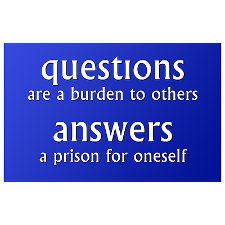
Questions

Why Acts 20:7, but not Acts 2:46-47?

Why 1 Corinthians 14:34-35, but not 1 Corinthians 11:5?

Why 1 Timothy 2:12, but not Acts 2:17?

Why Ephesians 5:19, but not Psalm 150? Or Revelation 5:8-9?

Why 1 Peter 3:21, sometimes with Romans 1:16 and 2 Corinthians 7:10 and Romans 10:10 and Hebrews 5:9, but hardly ever with Titus 2:11 or 1 Thessalonians 5:9 or Philippians 2:12? And almost never Luke 10:27-28 or Luke 12:33 or Mark 10:29-30 or John 12:25?

Who gets to decide which? Elders? Preachers? All of us? And why do we decide the way we do?

And what does it say about us when we choose the weekly over the daily, the easy over the difficult, the traditional over the Christ-like, the exclusive-of-others over the inclusive-of-others, the silent over the expressed, the selfish over the selfless?

Praying for CFTF, Day 3

Glorious Creator and God,

Praise and honor is due You for Your providence and mercy; Your steadfast lovingkindness and your unswayable justice.

Today I pray for the folks speaking and attending Contending for the Faith, those whose books they are examining, their families, and all who seek to serve You.

I pray especially for John West, Daniel Coe, Sonya West, Gene Hill, Doug Post, Wayne Blake, Michael Hatcher, and Daniel Denham.

Help us all make every effort to keep the unity of the Spirit through the bond of peace.

As Your Son prayed, I also pray: “My prayer is not that you take [us] out of the world but that you protect [us] from the evil one. [We] are not of the world, even as [Jesus was] not of it. Sanctify [us] by the truth; your word is truth. As you sent [Him] into the world, [He has] sent [us] into the world. … May [we] be brought to complete unity to let the world know that You sent [Him] and have loved [us] even as you have loved [Him].”

And I pray in His name:

Amen.

Praying for CFTF, Day 2

Father God,

May the words of our mouths and the meditations of our hearts be pleasing and acceptable in Your sight, O Lord, our strength and rock and Redeemer.

I lift Skip Francis, Danny Douglas, Sonya West, Bruce Stulting, Johnny Oxendine, Ken Chumbly and Paul Vaughn to Your throne this morning, and all of those whose works they critique today at Contending for the Faith; as well as their families and friends. I pray for those attending and listening; for the discernment afforded by your Spirit, guiding us into all truth; for the brotherly love in which we should be devoted to each other and show honor to each other above our individual selves.

“May the God who gives endurance and encouragement give [us] a spirit of unity among [ourselves] as [we] follow Christ Jesus” and pray in His name:

Amen.

Praying for CFTF, Day 1

Holy and righteous God; loving and merciful Lord,

May this day begin and end in praise to Your glorious wisdom, providence, justice and compassion.

Father, this morning I lift up the brothers and sisters who will participate in the “Contending for the Faith” lectures, and especially for those who have accepted the burden of speaking in Your behalf.

But I also ask that You pour forth Your Holy Spirit into all who seek to speak for You today. Put Your words in their mouths, and meditations upon Your word in their hearts. May all of us who believe be so blessed as to speak only Your words and not our own; to express Your desires and not our own; to demonstrate the love that is in Your heart and not the passions of our own.

Confound our minds when we attempt anything less. Slur our speech. Stop our tongues. Defeat our selfishness.

Help us proclaim by our words and our lives Jesus Christ, and Him crucified and raised so that by the lifting up of our Savior, all men might be drawn to Him.

May Your Spirit of truth compel us to testify about Jesus … guide us into all truth … and sanctify us in the truth; Your word is truth.

I pray especially for David P. Brown, Terry Hightower, Lester Kamp and Lynn Parker – speaking at CTF today. I also pray for those whose works they critique: Todd Deaver, Al Maxey, C. Leonard Allen, Richard T. Hughes and Michael R. Weed and the family of the late Cecil Hook.

Purge from us “all bitterness, rage and anger, brawling and slander, along with every form of malice.”

Grant us the discernment to test every spirit; to “recognize the Spirit of truth and the spirit of falsehood.”

May all that is spoken today be spoken in Your irenic Spirit of love and concern for the souls of the saints and the unreached.

May our “conversation be always full of grace, seasoned with salt, so that [we] may know how to answer everyone.”

May all be said and done to Your glory and Yours only – not ours – this day and every day.

I pray this through Your Son, Jesus Christ:

Amen.

Assumptions

In order to turn the entirety of the Bible into law – or even just the parts that you want to turn into law – by way of the “C.E.N.I” (command, example, necessary inference) hermeneutic, you have to make some assumptions.

  • That the Bible is meant to be read as law
  • That we cannot know the mind of God except through scripture.
  • That all or most imperatives are intended as commands
  • That imperatives are meant for everyone in every era in every circumstance
  • That imperatives are from God even if they are issued by a Biblical character
  • That only one interpretation of an imperative can be correct and is therefore clear
  • That all or most examples are “good” examples
  • That all or most examples are intended as commands
  • That examples are meant to describe something God intends for everyone in every era in every circumstance to follow
  • That all or most activities inferred are intended as commands
  • That inferences are necessary
  • That inferences are indisputable
  • That inferences are meant to include everyone in every era in every circumstance
  • That imperatives having to do with gathered worship (e.g., “do not forsake the assembly …”) affect one’s salvation and must be emphasized; that other imperatives (e.g., “sell your possessions and give to the poor”) do not affect one’s salvation and need not be emphasized
  • That, after being given Christ as a living example, we need more laws than have already been revealed before His arrival rather than fewer
  • That law has not been superceded by Christ’s grace
  • That law is still required as a schoolmaster/guardian/pedagogue
  • That words/phrases translated “law” and/or “the law” in the New Testament always refer to the law of Moses
  • That ignorance of God’s will is no excuse and God will not forgive it.
  • That God’s justice in scripture is uncontaminated by mercy and can therefore be consistently predicted to be judgmental and condemning (e.g., that God would have sunk the ark and drowned every creature aboard her if Noah had used – even if by mistake – any other wood than “gopher wood.”)
  • That scriptures which seem to contradict these principles are irrelevant and must be ignored or can logically and clearly be shown to be irrelevant.

If you further interpret the resulting laws through the regulative principle (or “law of silence”), you have to make even more assumptions:

  • That any given action is either prohibited or commanded by scripture; there are no practices about which God does not care and does not express preference
  • That there are no longer any disputable matters, as the principle of silence covers all unspoken commands
  • That the silence of God in scripture on any given practice is prohibitive
  • That there must be exceptions to the principle of silence, as there are unspoken commands which clearly carry no harm nor detriment and may assist in obeying other commands
  • That these exceptions are included in the principle of expedience
  • That these two principles (regulative/silence and expedience), never explicitly commanded, exemplified or implied by scripture, are not prohibited by the silence of scripture regarding them

My.

That’s a lot of assumptions.

What does that old schoolyard proverb say? That when we “ASSUME,” it makes something-or-other of “U” and “ME” …?

David H. Bobo

Passing The Torch

My blogging friend John Dobbs just challenged me by a Facebook e-mail to participate in a blog/Facebook meme saluting a minister who has been influential in my life, and while there have been several, one name stands out.

I’ve only mentioned him, I believe, in one post before, and that is a slight of unforgivable proportions.

My childhood minister at Fountain Square Church of Christ in Indianapolis, Indiana was David H. Bobo.

I cannot think of any incident that better illustrates his character than the one related by Leroy Garrett in this (undated) article in his Restoration Review:

David H. Bobo, Fountain Square Church of Christ in Indianapolis, wrote in his church bulletin of the death of a fellow minister in the Church of Christ in the same city, W. L. Totty, a man who had vigorously opposed him for many years. Bobo explains that he and Totty were both trained in the “old school” of the Church of Christ, but that he was soon compelled to move in a different direction, especially in reference to Christian ethics and Biblical teaching. Now that his old antagonist is gone, Bobo writes: “In spite of the fact that my reputation among people who do not know me suffered greatly from his attacks, I am glad I knew Brother Totty and I hold no ill feelings about him. I can say with all the sincerity of my heart, ‘God rest his soul.’” Upon reading this I passed it along to Ouida. “How tragic,” I said to her, “it is enough to cause one to weep.” Jesus came to make us brothers and to cause us to treat each other as brothers. And yet even preaching brethren spend a lifetime together in the same city as enemies, all in the name of sound doctrine. While we appreciate David Bobo’s forgiving spirit, let us hope that stories like this among us are rapidly becoming a thing of the past. It is high time for us to realize who the real enemy is. As for David Bobo, it should be more widely known that he is one of our best educated ministers and ablest scholars, as well as a devoted Christian. He is presently teaching both Hebrew and Greek at Indiana Christian U., along with his ministry at Fountain Square. That school recently honored him with a D.D. degree, as if he needed another degree! I regret to add that all these years he has been one of the most maligned men among Churches of Christ.

My dad, an elder at Fountain Square until his death in 1993, attended that funeral and I remember hearing him tell my mom that David Bobo’s eulogy was completely gracious. That was for a man who unrelentingly and regularly attacked him (and many other local ministers of churches of Christ) in his church bulletin. I learned many years later that several of them were asked to conduct the funeral, and only Br. Bobo was willing.

David Bobo preached grace alongside of law, and gave me – gave my home church – a glimpse at the great span of God’s true nature, and he did so at a time when such views were obviously not just unpopular, but considered heresy by some.

Now, as charged by John Dobbs, I pass on the challenge of the meme to you: “Post a tribute to the minister that has blessed [you] the most.”

O.T. God / N.T. God

I admit it. When I was younger, I thought of God in those terms: Old Testament God and New Testament God.

Old Testament God was strict, unyielding, law-giving, vengeful, righteous and just.

New Testament God was loving, understanding, grace-lending, forgiving, faithful and merciful.

At first, I thought He had changed. You know, as if something unrecorded happened to His nature in those intertestamental times. Or that maybe having a Son softened His outlook toward us. He got nicer. Sweeter. More lovable. Less fearable and ferocious.

Then I thought that it was we who had changed. We grew up as a race, mankind did, because He gave us law, and we figured out how to act mature and maybe even be mature, so He didn’t have to treat us like vicious children.

Whatta buncha bunk.

God does not change (Malachi 3:6). And – like Father like Son – Jesus is the same, yesterday today and forever (Hebrews 13:8). And so are we, the same ornery human critters we have always been. (Ecclesiastes 9:3).

God has always been both loving and strict, unyielding and understanding, law-giving and grace-lending, vengeful and forgiving, righteous and faithful, merciful and just.

I just didn’t read scripture closely enough to see it before.

HE IS WHO HE IS (Exodus 3:14).

He explained that quite clearly to Moses:

“Then the LORD came down in the cloud and stood there with him and proclaimed his name, the LORD. And he passed in front of Moses, proclaiming, “The LORD, the LORD, the compassionate and gracious God, slow to anger, abounding in love and faithfulness, maintaining love to thousands, and forgiving wickedness, rebellion and sin. Yet he does not leave the guilty unpunished; he punishes the children and their children for the sin of the fathers to the third and fourth generation.” ~ Exodus 34:5-7

He didn’t obliterate Adam and Eve when they sinned; nor their son Cain (but showed mercy and put a mark of protection on him); nor Abram when he lied (twice!) about Sarai being only his sister; nor Aaron when he lied and said the calf sprang out of the fire; nor Aaron’s sons Eleazar and Ithamar when they disobediently did not eat an offering after their brothers disobeyed God with their offering by fire and were incinerated; nor Moses when he struck the rock … and on and on and on.

And if I got the notion that the just nature of God somehow disappeared before the star of Bethlehem shone, it certainly wasn’t from anything Jesus said:

“Then he will say to those on his left, ‘Depart from me, you who are cursed, into the eternal fire prepared for the devil and his angels. … Then they will go away to eternal punishment, but the righteous to eternal life.” ~ Matthew 25:41, 46

Not even sins of omission – failing to care for the poor and hungry and incarcerated – are too small to escape God’s wrath.

And I certainly didn’t get my goofy perception from John, to whom it was revealed:

“Then I saw a great white throne and him who was seated on it. Earth and sky fled from his presence, and there was no place for them. And I saw the dead, great and small, standing before the throne, and books were opened. Another book was opened, which is the book of life. The dead were judged according to what they had done as recorded in the books. The sea gave up the dead that were in it, and death and Hades gave up the dead that were in them, and each person was judged according to what he had done. Then death and Hades were thrown into the lake of fire. The lake of fire is the second death. If anyone’s name was not found written in the book of life, he was thrown into the lake of fire.” ~ Revelation 20:11-15

Now it would be very convenient for me to be able to compartmentalize God and be done with the part of His nature that I don’t want to deal with; to have a huggy-cuddly-snuggly god who looks the other way when I do what I want to, even if it hurts him or others or even myself. Because then I could go cry to him and he would just say, “Oh, there, there. I know you didn’t mean it. Let me make that boo-boo go away” and he would undo all the laws of causality just for me and make it as if I had never done anything bad.

And I would never, ever learn anything worthwhile at all.

I could do it all my way.

How convenient for me.

Because who needs a god who gets angry and who cares about all of his created children and wants them to be good all the time and not hurt themselves or each other and doesn’t let them have their own way?

God is no capricious, arbitrary, maturing nor schizophrenic god like the creations of Greek and Roman philosophy (and many, many other religious cultures who created “god” in their own image).

He is always the same because we are the same, just as we have always been: selfish, rebellious, deceitful, ornery, violent, murderous.

He is the same because we need a constant in the chaos we have created for ourselves through the gift of choice He gives us: to be like Him, or to be like us.

What changed was that the time came for Him to make good on all the promises He had made us; to send us an example of his just-and-merciful nature in the person of His Son that we could see and imitate and choose wisely; to send us someOne who could measure up to the perfect standard that none of us could possibly approach.

And then die, to remind us that all our self and sin leads to death.

And then to live again, to prove to us that He has the power to forgive and give life to us again after sin has reduced us to dust and ashes.

That same God, manifesting a mastery of both aspects of the nature we simply cannot achieve, is One (Deuteronomy 6:4); One holy God (Leviticus 11:45); whose ways are loving and faithful for those who keep His covenant (Psalm 25:10); but who destroys the wicked (Psalm 145:20). He is stern to those who fall and kind to those who continue in His kindness (Romans 11:22), which He has expressed to us in Christ Jesus (Ephesians 2:7).

So there are two covenants. But there is one testament; a testament to One divine, perfect, unchanging nature reaching out to every flawed, selfish, human nature – each one of us – created with the ability and purpose of changing, maturing, growing better, growing God-wise and God-ward through faith in Jesus Christ. One God, over all the nations, indivisible, with liberty and justice for all.

He lets us choose.

And He lets us bear the consequences.

Because He loves us: this singular, unimpeachable, incomprehensible, inconvenient God.

And It Came To Pass

I’ve published the first verse of this item at the end of a post before – because it was all I could remember of it.

I just ran across the whole thing, which I wrote in 1983 not long after my divorce from my first wife became final. (I’ve been writing bad poetry for a long time.)

Here’s the entirety of it. Strap on your anti-Vogon earplugs and eyeshields.

And It Came To Pass

” ‘And it came to pass…'”
the old man would say
was his favorite Bible verse.
“The best times and the worst;
all the last things and the first:
not a one of them comes to stay
but they come to pass.”

So she came to pass
one day, into my life
and found her way to my heart.
Our love grew right from the start.
I never dreamed we’d grow apart
when we promised as man and wife
that our love would last.

It takes more than fate
and more than love to be
truly one from troth to dust.
It takes honesty and trust —
and commitment is a must.
All of this we came to see
but we came too late.

It will come to pass
that I’ll be old some day
and I, too, will prize that verse.
The best times and the worst
could have been shared if we’d first
known that not a one came to stay
but they came to pass.

‘Restoration & Transformation’ – New Wineskins

It’s been a great joy these last two months to serve New Wineskins e-zine as guest editor of the January-February edition, themed “Restoration & Transformation.”

Early in the year, Senior Editor Greg Taylor and I discussed the possibility of recruiting a guest editor for each issue of the e-zine this year while he is shouldering the tremendous responsibility as lead minister at Garnett Church of Christ in Tulsa, OK (see his recent article segment in Christianity Today’s sister magazine Leadership Journal). Greg is also trying to arrange a return visit to Africa for his family, where they served as missionaries about a decade ago. That, on top of several other projects he has in the works!

I volunteered to helm the first issue while he has been leaning on some of our mutual friends and past writing contributors to serve as guest editors this year. I have to say, the response has been excellent and I am excited about the themes that they have proposed!

“Restoration and Transformation” is a compilation of some of the best blog posts, articles and other works that I could find on the subject of putting Christ first as the goal of restoring the church through the transformation of its people. Some – but not all! While there’s no limit on the number of pages or pixels I can squeeze into an issue, there is a limit on the amount of time I can spend toward it.

It’s been exciting to post works from Wineskins and New Wineskins contributors like Edward Fudge, K. Rex Butts, and Founding Co-Editor Rubel Shelly as well as bringing aboard some fresh, new talent like Ben Overby, Brian Mashburn, Tim Woodroof, Matt Dabbs and others. (I don’t want to spoil the surprise of articles yet to “go live” by naming them all!)

I hope you’ll lend an eye to each of these advocates for the kind of change churches need – restoration by way of transformation.