The Maxims of Methuselah Moot

Methuselah Moot

Robert Heinlein chronicled a far-flung future’s The Notebooks of Lazarus Long; a few years later, David Gerrold responded with the often-hilarious and equally-irreverent Sayings of Solomon Short. That was all years ago, so I have decided at last to reveal The Maxims of Methuselah Moot (although some of them go back as far as the Greek philosopher-humorist Mediocrites).

It is merely coincidental that most if not all are 140 characters or less.

  • Lads, here’s a good rule of thumb: Never date a girl whose voice is deeper than yours.
  • So I asked Voldemort “What’s it like being dead this time?” He didn’t say anything, so either he’s very ticked off or it’s a lot more final.
  • Sometimes the kindest thing you can say is nothing. Especially when you’re angry. But also when someone else is hurting. And you’re angry. (This one may have been inspired by Jack Handey.)
  • Has anyone let Sarah Palin know that if she’s ever elected President, she would be expected to actually do the job?
  • Actually, Donald Trump was the first to offer a jobs plan: “You’re fired!”
  • I’m not a drinkin’ man, but if a Pan-Galactic Gargle Blaster would alleviate the way I feel this morning, I’d risk it.
  • There is no opinion so stupid that you can’t reply “Well, of all the points of view there are in the world, yours is certainly one of them.”
  • There is nothing so rare as a day in June (except in June) unless it’s a steaklet in a French restaurant.
  • The art of mosaic isn’t all it’s cracked up to be.
  • Indecisiveness isn’t as bad as all that — and yet it is, and much worse, sometimes.
  • With each passing year, my skills in advanced narcolepsy become even more acute.
  • If I had it all to do over again … aaah, I probably wouldn’t live to be 112, so what’s the point?
  • Hey, folks. Install a window in your paradigm, okay?
  • If you cross a chocolate lab with a maltese, do you get a chocolate malt?
  • Today’s earthquake near the District of Columbia has confirmed the existence of the legendary Congressional Fault.
  • There is a beverage that seemeth sweet to a man, but the aftertaste thereof is bitterness to the soul.
  • I’d buy myself some ginko biloba if I thought I could remember to take it.
  • You go ahead and have a fun night. I’m tired enough for both of us and can turn in early. You’re welcome.
  • The way to a man’s heart is through his accelerator pedal foot. Cardiologists have known this for years. All women should.
  • Surely there can be no computers in heaven, for Gabriel himself would lose his soul at their mischief. All the more reason to yearn for it.
  • Some like Cutter’s Point; some like High Point. But my favorite brand of decaf coffee is Whats-the Point.
  • Like Howard the Duck, we are all trapped in a world we never made. Well, okay, we made some of it … worse. But it’s not all Cleveland.
  • Thinking about calling my dentist to see if he could schedule me in today for a couple of hours of soft music and gas.
  • I gave up worrying — or thought I had, until I caught myself worrying that I wasn’t worrying enough.
  • The most tragic oxymoron of all: “holy war.”
  • There are two types of people in the world: Those who finish what they start
  • Well, here I am sitting on my bottom with a headache. But at least I’m not sitting on someone else’s bottom with their headache.
  • In addition to a “Dislike” button … has anyone approached Facebook about adding a “Don’t Care” button?
  • How many Mad Hatters does a Tea Party need?
  • I appreciate air conditioning. I’m not a big fan of big fans.
  • Yay. The debt ceiling hike passed. Now we can spend more money than we have for a little while longer before China forecloses on US. Yay.
  • I just bit my tongue. I’d have bitten someone else’s, but I was by myself.

Well, that’s just a sampling of The Maxims of Methuselah Moot that you’ve missed last month by not following keith_brenton on Twitter, ’cause I share them there almost as fast as I receive through the ol’ neurotransmitters (unless I happen to remember my aluminum-foil skullcap and can avoid them).

9/11: ‘Nor Did It Enter My Mind’

We look back on the terrorist attacks of 9/11/2001 and we still want someone to have to pay for them — and I believe that reflects a sense of God’s just nature in our own — but there is no one around to blame. The direct perpetrators at that time had themselves perished in the flames, and the cowards who instigated their treachery seemed to have taken their cues at stealth from termites or cockroaches. Too often, in the ten-year aftermath, we have turned on those we felt should have prevented or protected our nation from these attacks, and have savaged them with our frustrated fury.

Yes, to some degree, there were people whose jobs were to anticipate evil and take steps to prevent and protect.

At the same time, there are acts so heinous, so … may I use the word unthinkable? … that I am not sure we can hold those people responsible for not considering them a serious risk.

After all, there were acts so heinous in the history of Israel that God said regarding them, “something I did not command them, nor did it enter my mind.” Three times He repeats the phrase in Jeremiah:

They have built the high places of Topheth in the Valley of Ben Hinnom to burn their sons and daughters in the fire—something I did not command, nor did it enter my mind.

~ Jeremiah 7:31

They have built the high places of Baal to burn their children in the fire as offerings to Baal—something I did not command or mention, nor did it enter my mind.

~ Jeremiah 19:5

They built high places for Baal in the Valley of Ben Hinnom to sacrifice their sons and daughters to Molek, though I never commanded—nor did it enter my mind—that they should do such a detestable thing and so make Judah sin.

~ Jeremiah 32:35

Does that mean it never occurred to God that Israel could do such a thing? Obviously not, since He (again) three times specifically forbade it in Leviticus:

“‘Do not give any of your children to be sacrificed to Molek, for you must not profane the name of your God. I am the LORD.

~Leviticus 18:21

If the members of the community close their eyes when that man sacrifices one of his children to Molek and if they fail to put him to death,

~ Leviticus 20:4

“Say to the Israelites: ‘Any Israelite or any foreigner residing in Israel who sacrifices any of his children to Molek is to be put to death. The members of the community are to stone him.

~ Leviticus 20:2

So did God contradict Himself? No; and I think there are two possibilities that explain it:

  1. The phrase “nor did it enter My mind” could refer specifically to the act of commanding it; it would never have entered HIS mind to command such a thing (the incident with Isaac notwithstanding; there’s no evidence He ever intended for Abraham to follow through — see the phrasing of “tested” in Hebrews 11:17).
  2. He perceived the possibility that Israel could sink this low … He just couldn’t imagine that they would do so, after instilling them not only with instinct of parental love but also after giving them a direct and specific command not to do such a reprehensible thing, especially in the name of faith and religion.

Either way, it was never God’s will for His children to put their own children to death in the same way that the surrounding peoples did in their worship of idol gods. In fact, preventing this kind of abomination seems to be the specific reason why God commanded the obliteration of those peoples as the Israelites moved into the land promised to them (Deuteronomy 20:16-18). It is possible that nothing else would have also obliterated those practices from the land.

The crimes against humanity that took place on 9/11/2001 are of this detestable nature: people willingly — perhaps eagerly — sacrificing their own lives in order to commit mass murder of thousands, including children, as an act of piety because some shaman in their religious structure instructed them to do so. There were Muslims who died in those attacks. There were children who died in those attacks. None of that served as a deterrent to the warped motivations of the warped individuals who masterminded and conducted the attacks.

Ten years later, we still have difficulty dealing with the reality of it.

Let’s not blame the good people we put in charge of our protection for being no more willing to believe in the likelihood of that kind of inhumanity on that kind of scale than the Lord Himself was.

Outwords

Let me take a quick break from my dialogue with my great-great grandfather to say something as briefly and clearly as I know how:

Phrases like “our identity” and “our distinctiveness” have no place in the vocabulary of any Christian who believes that Jesus prayed John 17. They should be cast out as demons were cast out by Jesus and those who followed Him.

You will not find an individual church’s “identity” or “distinctiveness” as a concept in scripture. Heck, you won’t even find those words in scripture.

So who authorized anybody to use them with regard to the church at all, let alone as issues that are paramount?

Those are words used by people who are divisive and contentious, and I think we all know what scripture has to say about such people.

They are words which create division and cause dissension, because wherever there is an “our” or “us,” there must be a “their” and “them.” There is no denying this.

They are scare words, because the people who use them are scared to lose the power that they think they have by using them.

The power in the church belongs to God in Christ Jesus, not anyone else. The only identity that the church has is through Christ Jesus, our Lord. The only distinctiveness we should have is in lives that reflect His, which shone forth the Father’s glory from the moment of His birth to the moment of His death, and then beyond and on and on.

“Our identity” and “Our distinctiveness” are judgmental words, because they cast judgment and condemnation on others who are different, see things differently, have different customs.

They are contra-authorized words, prohibited because scripture advises that we count others better than ourselves and accept each other as we have been accepted in Christ.

They are unholy words, because they do not maintain the Spirit of unity in the bond of peace, but seek to supplant Him with self.

They are arrogant words, because they presume that “us” and “our” is correct and therefore righteous and therefore superior. Scripture says that no one is righteous; no, not one … except through the blood of Jesus Christ. And that through faith, which is not even of ourselves, but is the gift of God.

Only by Jesus’ sacrifice and His judgment will sheep be separated from goats; only by His grace will any be saved; only by His justice will any be excluded … not by any lines that we draw or  judgments we make or by any subscriptural human teachings that we espouse as dearly as if they were God’s own words when God had no intention of saying them. And it should be to no one’s surprise that they do not appear in scripture.

They are words by which their users will be judged, and I am not at all superior to or more righteous than those who use them constantly because I have used them myself, over and over, without even thinking of the connotations of them or the perceptions of others or — most importantly — the way they sound to God’s ears.

May God forgive me.

May God forgive us all.

Sermons and Chimes: The Ark and The Church

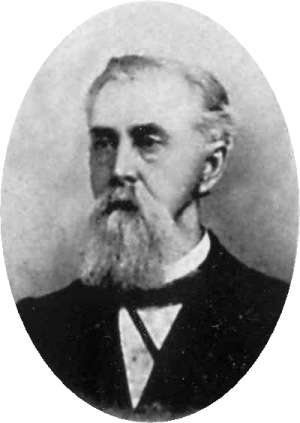
Alfred Ellmore, my Great-Great GrandfatherI’m coming to terms with my heritage in Churches of Christ through the person of my great-great grandfather Alfred Ellmore, one of the early preachers in the Restoration Movement that yielded this fellowship. This is an installment from his 1914 book Sermons and Chimes, and my reactions to it in the form of a dialogue with him:

SERMONS

THE ARK AND THE CHURCH

“And God said unto Noah, The end of all flesh is come before me, for the earth is filled with violence through them, and behold I will destroy them, with the earth. Make thee an Ark of gopher wood, rooms shalt thou make in the Ark, and pitch it within and without with pitch.” (Gen. 6.)

If a man who had never heard of the Bible were given the Old Testament to itself, he would be surprised at the many wonderful things he had read, but he would also be surprised at not finding the object of his search. He had been told that there was a golden thread running entirely through the book, promising the world a great king, a deliverer, and a conqueror — ah! a Savior — but having read the book through, he found the history of many great men, but the great one promised he found not.

But if he were given a copy of the New Testament, having never seen nor heard of the Old Testament, he would find at its beginning, and running all the way through the book: “It is written, it is written in the law, it is written in the prophets, it is written in the psalms,” etc., and he would wonder who wrote those books, and where he could find them.

One of the many strong evidences that the Bible is divine, is its types and its anti-types. The Old Testament abounds with shadows, the full meaning of which would never have been known, if the New Testament had not been written. For example, what would the world know of the deeper meaning of the opening of the side of Adam, and the means taken therefrom to form for him a wife, if the side of Christ had not been pierced and the elements been taken therefrom — the water and the blood — to form and cleanse for him a bride, the church? God has given the world but two lawgivers, Moses and Christ, and we should never have had the deeper meaning of the finding of the former in the little basket in the rushes, if we had not heard of the finding of the infant Christ in the manger! And the world would never have seen the deeper signification of Adam and his one wife being required to populate the whole world with his offspring, if we had never heard of the wonderful transaction of Christ, through his one wife, the church, populating the whole world with Christians.

Great-great Grandfather, the metaphor of the bride being made from the side of the first Adam and the last Adam (as Paul phrases it in 1 Corinthians 15:45) is deep and visceral and invaluable. Thank you for that.

A few of the many types of Christ, are Adam, Moses and Isaac. Adam, the progenitor of the human race, foreshadowing that Christ would bless the world, the whole world, through a spiritual family which he would bring forth. Moses leading fleshly Israel from Egypt to Canaan, through the wilderness, foreshadowing that Christ would lead the spiritual hosts through this world of sin, to the land of rest. Isaac being made a sacrifice, in a figure, was the type of Christ, who was made the atoning sacrifice of the world. A few of the chief types of the church are the Ark, the Tabernacle and the Temple. And when these types are deeply studied and their corresponding anti-types in the New Testament are found and fitted, and a few prophecies added from the Old Testament, they form a bulwark of testimony that men and demons can not shake.

But I beg leave to deviate for just a few minutes, to adduce a golden thread as evidence from the work of Moses. Moses rose up 2,200 years this side of creation, and without a word of written history, in a few brief chapters covered that period perfectly and accurately. Then he went upon the mountain and received the law of ten commands, which he delivered to the people of God. Then he became prophet, and covered 1,800 years with a few prophecies, reaching to the coming of Christ, hence this man Moses, whose flaming words Ingersoll and a few lesser lights delight to mar and stain, became historian, lawgiver and prophet, and covered a period of 4,000 years, and he has never made one mistake that any one knows of. And how could he, with no date written, give an accurate history of 2,200 years? And how could he look down th[r]ough the ages and give accurate prophecies which are indorsed [sp.] by the later prophets, by the Savior and the apostles, if he had been only man? No wonder that Ingersoll, at death, cowered when considering his tare-sowing, and looking into the future, realized that he must reap as he had sown. What a future he will meet. Josh Billings, the humorist, gives my sentiments when contrasting Moses and Ingersoll. He says: “I wouldn’t give five cents to hear Ingersoll on the mistakes of Moses, but I would give five hundred dollars to hear Moses on the mistakes of Ingersoll.”

As an illustration from type and anti-type, take the following: Some morning in autumn a farmer goes into his field and sees his shocks torn, and there are tracks in the soft soil, such as he has never before seen. On looking to the east he sees the fence is broken down, and also upon the west. His conclusion is that some wild beast has done the damage. He tells his neighbors of his loss, and they say: “Perhaps it was a cow that has broken into your field.” “Oh, no, I know it was not a cow.” “But did you see the animal or see any one who did see it?” “No.” “Then how can you be so positive that the animal was not a cow?” “I know it by the track left in the soil.” Calling in some of the neighbors, and all deciding that the animal was a foreigner, they decided to call a man who was a great hunter, who had seen all kinds of animals on the American continent, who, when he saw the track says: “That is the track of a black bear! Sure, ask a number.” “May it not have been a grizzly or a mountain lion?” “No, sirs.” “Not having seen the animal, how can you be so positive as to the kind of a bear?” “I identify it by the extra toe in the track.” Now if this hunter is not mistaken as to the track, you are sure there is a black bear roaming somewhere in the community. There is no other animal known which makes such a track.

Dear ancestor, in your era the debate over inspiration may have been so well known that your listener / reader could discern your intent and easily deduce your support of the Holy Spirit’s role in bringing about the scriptures. But those of us in later days — and even disinterested unbelievers of your time — might have benefited from a clear statement of it.

In Noah’s time, the world having become desperately wicked, and every imagination of the thoughts of his [man’s] heart was only evil continually, and refusing to hear the counsel of God, he concluded to destroy them, and said to Noah: “I will destroy the world with a flood; make thee an ark to the saving of yourself and your house.”

1. Now what was the object of the Ark? Salvation from death. From what death? Physical death. Physical death by what means? By drowning. And if there had been no flood, there would have been no need of an Ark. Where no loss is involved, there can be no salvation. This is true of every salvation spoken in the Bible. There could be no salvation from the grave if there had been no grave, and no salvation from sin if there had been no sin, and there can be no salvation from hell if there is no hell. The loss of the antediluvians may reach further than physical death, but this is the salvation promised by means of the Ark.

Now, let us take a view of the church. Christ said: “I will build my church.” Christ is the head of this body, and no man can come to the Father but by him. To him be glory in the church, by Christ Jesus throughout all ages, world without end. But some say the church can’t save us. But did the Ark save? Yes, those who went into it, and remained until the flood was over. And I think there is one class whom the church can save, those who go into it, remain in it, and do their duty.

There is a problem with this metaphor — that of the ark as type and church as antitype — and that is, of course, it is not strictly scriptural. It’s one that you, Great-great Grandfather, have devised. While it may be illustrative, it is not what one would call authoritative. That’s the purpose of a metaphor or parable: to clarify, rather than justify. They make truth clear; they do not make truth true.

When Peter speaks of Noah and salvation (1 Peter 3:19-22), he’s talking about how the resurrection of Christ pioneers the way for our own; how the waters of baptism wash away the world’s sin as the waters of the flood did so in Noah’s day. It is a chapter about imitating Christ, even through suffering as He did. The church — strictly speaking — can’t save us; we are saved into it. We could vote each other in and out all we want, but it would not save anyone.

2. How many Arks did Noah build? Only one. But since there were a great many people, why not make several Arks? And you know “all people can’t see alike,” and one Ark might not have suited all, with so many tastes and notions. And some might no like old Noah, he was a pessimist, clear and simple, no way would do but his way. And some of the women might not like some of Noah’s family. No, we can never join such a crowd as that! And I have no doubt but if we had a history of the suggestions made by men to Noah’s sons, and made by women to the sons’ wives, we would have something like the following: “Your father is old and he is becoming childish; we hardly think there will be a flood — it has never rained, and there is not sufficient water in all the seas and oceans to cover all these mountains; and why require Noah to labor more than one hundred years to build an Ark? And if he must bring a flood, he can point out to Noah the highest mountain and have him collect all the required creatures to that mountain, and take there of all food and preserve life as well there as in an Ark, wich would become musty and very unpleasant, and saved your father all this work? And if none are saved except those in the Ark, there will be very few saved.” And the women would approach the three wives of these three sons and suggest: “Now your father is a good man, but he is narrow in his views, and thinks nobody right but those who believe as he believes, and by his rigid preaching he has become very unpopular. Now, have the old man to exercise charity for the views of others, there are others who are as good as yourselves.”

Great-great Grandfather, I think you may have been as much a fan of Mark Twain as I am.

Then we might hear something like the following from the faithful old Patriarch: “Dear daughters, I would be glad to please all, and would be far from preaching a doctrine purposely to displease any one, but I have a message, not from man, but from God, and if I refuse — nay, fail — to deliver that messages, strictly and perfectly, to the minutest detail, we will all go down into the dark waters of inconsolable grief, with the rest of the disobedient.”

And how many churches did Christ build? But one. The church is the Bride, the Lamb’s wife, and we can not think Christ was a polygamist. The word “church” is in the singular, except when various congregations are meant; the seven churches of Asia mean simply, the seven congregations. The followers of Christ are commanded to be of one heart and of one soul, to speak the same things, and there must be no division among them.

3. The Ark was 450 feet long, 75 feet wide, and 45 feet in height, and had three stories, and yet it had but one door, which was in the side, and everything that went into the Ark went in through that one door. There was not one door for the admission of the large animals and one for the small animals, and another for the birds. Jesus says of the door into his church: “I am the door.” Then we must go in through Him. And when the side of Jesus was opened thence forth came the water and blood, the cleansing elements from sin, and no man can get into His church except through the water and the blood. We are immersed in water, into Christ’s death, and there we come in contact with His blood, and we are washed, cleansed and saved.

I have written before about the phrase “come in contact with His blood,” and since writing then (I Can’t Find It), I still have found no preponderance of evidence for saying it.

4. There was but one window in the Ark, and that was above, or upon the top, and here we see the sideom in so arranging the light. If the window had been near the base the heavy freightage would have kept it inundated, or if half way up, the spray and the waves would have darkened the window much of the time. But being upon the top, all the light possible could flow into it. And when we come to consider the light brought into the church, it all comes in through the one window. And what is that light? Some say it is conscience. No, if this be the light, then we would have as many windows as people, and no individual would give light to another.

But another says it is the Baptism of the Holy Spirit. No, the gospel was often preached by the apostles, and people were saved, in the absence of the Baptism of the Holy Spirit. The Baptism of the Holy Spirit never converted any one, was not given as a condition to pardon. The Baptism of the Holy Spirit fell upon men to enable them to work miracles, and this occurred but twice, once upon the Jew and once upon the Gentile, and following this miraculous power men were baptized in water for the remission of their sins. (Acts 2 and 10.)

“But twice”? Then, dear ancestor, you would write off Acts 19:11, 1 Corinthians 12 and 1 Corinthians 14, 2 Corinthians 12:12, Galatians 3:5, and Hebrews 2:4? You know, there is such a thing as pushing a metaphor too far.

Clearly, then, it is the Bible which brings the light from heaven. Where this revelation has never been given, people are in darkness, but where delivered and accepted, the inhabitants become enlightened and rejoice in this heavenly light.

5. All the food was in the Ark. The command to Noah was: “And take thou unto thee of all food that is eaten, and gather it to thee, and it shall be for food for thee and for them. Thus did Noah, according to all that God commanded him, so did he.” After the waters covered the earth there was no food for man, beast nor fowl.

But now men have become wise. One church, one assembly, one altar, is not sufficient. It has become necessary to have in addition to this perfect Holy Place, a separate gathering for the young men, another for the young women, another for the young people, and still another for the children! But look here, my zealous but misguided brother. Christ has but one body, and in this divine body — the church — dwells the Holy Spirit, in this one body is the blood, which remains in this body. And the grace of God, all of it, comes to the Christian through this divine medium. And every parable spoken by Christ where a blessing is conferred, it is within, and not without. And he formed the parables from things with which they were familiar, that the most unlearned could grasp his meaning. It was in the net that the fishes were caught, in the vineyard that the laborers must work, in the meal the leaven was placed, in the field that the seed was sown, in the field was found the pearl of great price, in the garden the mustard was sown, in the field the treasure was found. Let us be careful, very careful, that we do not direct some soul astray.

And here, I would say, is where the metaphor is taken too far — in the direction of painting the church as a place, rather than as a people. The wooden ark surely makes a fine metaphor to a wooden church building as typical of your day, but it is not an accurate metaphor in that way. Thinking of the church as a single edifice has led many to conclude that people meeting in a different building from their own cannot be a part of their church, and that is simply erroneous. When we so judge, we are judging, and that is not our place. Our place is to love, accept, and share the gospel — and to maintain the unity of the Spirit in the bond of peace.

6. There was one family in the Ark, and they must eat and drink to perpetuate life. If one had decided to fast during their stay in the Ark, he would have fasted longer than Dr. Tanner fasted. They were in the Ark a year and ten days. They went into the Ark on the seventeenth day of the second month in the six hundredth year of Noah (Gen. 7:11-13.). and they went forth out of the Ark upon the twenty-seventh day of the second month in the six hundred and first year of Noah (Gen. 8:13). During that period, in the one Ark, the one family prayed at the one altar, and ate at the one table. And we can not satisfy the longings of the soul at heathen altars nor gluttonous feasts.

7. The conditions of salvation by means of the Ark and of the church are the same. The first thing necessary in Noah’s case was a revelation. If God had not made known to him the coming destruction, Noah would have known nothing of it, and would have made no preparation for his salvation. After being informed of the approaching flood and of the terms of salvation, Noah must believe the revelation. The next thing was works, faithful works, complying with the terms offering salvation. He must build the Ark, go into it and remain, and be faithful to all the duties incumbent upon him as governor of that divine family. So in the salvation proposed in the church. As to the means of transition, bearing Noah’s family from the old world over into the new world, Peter says: “Wherein few, that is eight, souls were saved by water, the like figure wherein baptism doth now save us.” (1. Peter 3.) The water picked them up, and by means of the Ark, they were carried over and put down into the new world, so baptism takes the subject from the kingdom of sin and puts him into Christ, his church. He is then born again, born of God, born of water, born of the spirit, born (begotten) of the word, born anew, taken from the world and put into the church — saved. And the man of a very common intellect would say the birth was not of water alone. But some of the “called and sent” clergy now tell the people that baptism has nothing to do in saving men.

Baptism has much to do with saving men — but it is not the only thing God wants for us, and gives us, and wants to bless us with that is salvific; of His saving grace and power. Seeing baptism as a work of man — like building an ark — is an error that has seduced millions. Jesus built the church; not us (Matthew 16:18). And baptism is a gift from God (Matthew 21:25); ours to accept or reject. But in rejecting baptism, we reject its power of testimony to one’s immersion into the life of Christ and resurrection from one’s old dead person of sin.

8. I will now touch upon the destruction which followed the dispensation of God’s mercy, which lasted over one hundred years, but my pen is too feeble to portray that awful catastrophe. No heart can conceive, nor tongue describe, the horrors which fell upon that disobedient people. The Ark being finished, and the creatures all shut in, the windows of heaven were opened and for forty days and forty nights the waters fell in torrents, the low lands were covered, people’s hearts were faiting, they were being forced out of their homes. God is infinite in mercy. Many as devout prayers as were ever heard were offered, but the rains continued. People go up the hillsides. They were drenched and hungry. Children cried for bread. God is infinite in love! He loved all these people, but a God possessed of all the attributes can’t save people in disobedience. Poor old grandma’s strength had failed, and she had to be carried. O the cries and lamentations! Where are the children? Some had starved, some had fallen into the dark sea. God was able.

But see that group upon the highest hill; their provisions are exhausted, and they are ankle deep in water. God had said if they did not repent he would drown them; it looked that way then; they make their last appeal for help. God is infinite in all his attributes, and one of them is justice, and he will render to every man according to his works. Another is vengeance, and he will punish all who trample his righteous laws. If God had commanded Noah just then, saying, “They have suffered enough, push the Ark to those people and take them in,” would it have required a strong discourse, and a touching exhortation to induce them to enter the Ark? But it was too late — ah! too late.

But, my slothful brother and my heedless neighbor, let me once more remind you of that awful destruction, more fierce that this one, which I believe will fall upon the world in the near future. Peter says: “The world which then was being overflowed with water perished. But the heavens that are now, and the earth, by the same word are stored up for fire, being reserved against the day of judgment and destruction of ungodly men.” [2 Peter 3:6-7] He says: “The elements will melt with fervent heat, the earth and the works that are therein shall be burned up.” [2 Peter 3:10] Now, sinner, do you not believe this? Then eternal fire awaits you. But we, according to his promise, look for new heavens and a new earth wherein dwelleth righteousness. O that great day. We shall all be there.

There may have been a time when addressing one’s listeners and readers as “slothful” and “heedless” had an air of authority to them, but these days, insults simply come off as insulting. (I have to wonder if they did back in your day, too, Great-great Grandfather.) At any rate, I cannot recommend the use of them.

In fact, I have to question the whole psychology of pointing an accusing finger down from the pulpit of authority … trying to terrify someone out of hell and into doing a bunch of things that leads to trying to always do the right thing … lest one slide right back down a hell-bound slope. Does that really lead a person to become a devoted, life-long disciple and example of Christ? Fear?

Or does perfect love cast out fear? Doesn’t it make more sense to come alongside someone whose life-path wanders aimlessly … lovingly share the message of the dying-yet-living love of Christ with them … and teach them what it means to be like Him so that others can see His promise in our lives?

Sermons and Chimes: The Bible

Alfred Ellmore, my Great-Great GrandfatherI’m coming to terms with my heritage in Churches of Christ through the person of my great-great grandfather Alfred Ellmore, one of the early preachers in the Restoration Movement that yielded this fellowship. This is an installment from his 1914 book Sermons and Chimes, and my reactions to it in the form of a dialogue with him:

SERMONS

THE BIBLE.

The Bible is a finished book; it will admit of neither addition, subtraction nor change. No other book has such resources as the Bible. Each author has had full privilege to say all he wished to say, and therefore the book is complete. On this point the following summary is submitted. God in this book is heard, and has said all he wished to say, or to have said. Christ, both before and after his death, has said all he wants to say. The Holy Spirit, through men, is fully heard, good men uninspired have been heard, wicked men have been heard, the prophets have been heard, and the Arch-Deceiver once had an encounter, face to face, with the Master. All these have had impartial hearings, and wish to say nothing more. Now, if any man wish additional revelation, who would make it and what could he say?

I think I’ve been misunderstood in my answer to this question, dear ancestor, and I have no great desire to interrupt the flow of your thought, but … The Holy Spirit might well desire to make additional revelation and what He could say to and through people would be up to Him. But it might well take the form of personal direction or information (Acts 16:7), a warning (Acts 20:23; 21:11), or to inspire a realization of the blessed Lordship of Jesus, the Christ (1 Corinthians 12:3). These are revelations that are not supplanting, but supporting; not replacing, but reinforcing; not rescinding but reminding. I would not rush to say that His work is over and done.

There is no book in the world over which there has been as much debate and contention as has been over the Bible. And there is no room for another divine law. Its divinity has been discussed, upon by both sides, by as able controvertists as the world has ever had.

But because of the great controversies many reject the Bible. But are there not as great differences between men in other callings? Take men in the medical profession, and in the law, and over capital and labor, and we find in all these callings men who differ, and they are at sword’s points, each contending fore his dogma and his party. And while right and wrong are in the world, there will be religious differences. And while all acts pertaining to men’s duty are made plain in the Bible there is in it a depth, and a height and a breadth which no human mind can grasp. If all the mysteries in the Bible could have been solved, the book would have lost its interest many centuries ago.

But that the tyro may know that the Bible is super-human, take the following:

1. The Bible knows the past, the present and the future alike, and never makes a mistake as to date. It knows our course tomorrow as well as yesterday, our line to the grave as well as to our cradle. It gives a true history of our ancestry back to Eden. But it gives a minute history of the world for 4,000 years before Christ. And in recording events in history, behold the writers were giving prophecy for the future, and if these prophecies could be properly explained, their fulfillment would be as accurate as is the needle to the pole. But please turn to the future. The Bible lightens up the grave and gives assurance of the day of judgment, and when all the evidence is brought in, each part will fit into its place as the wheel fits into a perfect machine.

Great-great Grandpa … this 4,000-year reckoning of time, of course, depends solely on the research of Bishop James Ussher, whose chronological estimations were often included in the center margins of two-column commentary King James Version Bibles in your era, weren’t they? Especially the Scofield Reference Bible?

2. It advocates every pure thought, and every pure word, and every righteous deed performed by man. On the other hand, it condemns every licentious thought, every idle word, and every wicked act of man.

3. We dare not add to this volume nor take from it. “If any man shall add unto these things God shall add unto him the plagues which are written in this book, and if any man shall take away from the words of the book of this prophecy (Rev.) God shall take away his part out of the book of life, and from the holy city, and from the things written in this book.”

For near 2,000 years men have been legislating and forming laws and creeds for the supposed benefit of man, but no one man nor body of legislators have been found who could add even the eleventh command to the decalogue.

4. All other books, whether of history, of law, or of prophecy, when read once, or at most but a few times, lose their interest, and we keep them merely as books of reference. We have read them and exhausted their fountain. Not so with the Bible. We read it day by day, and chapter after chapter, and it is still the inexhaustible fountain to us.

5. It has been killed, and burned, and its funeral has been preached ten thousand times, but it rises up out of its ashes and haunts its assassin to the grave, and the more he opposes it the worse it troubles him. And in that sad hour which awaits all opposers of the blessed volume, the smoke of their sins will rise in awful density, until their lights will go out into eternal night, while the men of faith pass down into their graves with a halo of peace encircling them, into the palace royal of the universe

It is now about 1,900 years since the book was finished, and it has stood the storms of persecution, and it is gaining victories more wonderful than ever before.

But whether we shall ever be able to account for the book, one thing is certain, the book is here, and it is very much alive. And if we refuse to let it give its own origin, how shall we account for its advent into the world? It is not a product of nature, for nature reproduces of her kind. It is not spontaneous, it did not just happen.  Being a book of so much intelligence shows that it is the work of effort, of intelligence.

Well, did men — good men — of themselves, create the book? No, the authors who wrote claim they were moved to write by a higher power. We should not assign to men a work they claim not to be the authors of. But have bad men produced this book? Then, pray, what was their object in writing such a book, since from first to last it condemns wicked men, and seals their death warrant on almost every page? No, good men who wrote say they were moved by the Holy Spirit, and since God is its author, and the Holy Spirit is the medium, we claim that no evil design is in the book.

But one of the very greatest hindrances to the perfect understanding of the book is the lack of knowing how to classify and arrange its different parts into one perfect whole. A very common idea is, since the book is divine, that it is applicable to all people, under all circumstances, without considering as to the writer, to whom he is writing, and under which dispensation did those addressed live. They open, read and apply to themselves, when probably the language can not apply to them by hundreds of years.

Ah! Would that many of my siblings in Christ could understand this principle today: that some scripture is meant for us, some meant for all, and some was meant for others of a time long past. But the discernment of which sets of language within scripture does indeed apply to us can be difficult. What a blessing that we can ask and receive the discernment of God’s own Holy Spirit! (Luke 11:13; Ephesians 1:17; Colossians 1:9; James 1:5) Yet, dear ancestor, your era’s thrill over classification — which led to excesses like Dispensationalism — does not compare with the recognition that God through the Logos, His Christ, was consistently at work throughout the Word start to finish to reconcile mankind to Himself through His patient instruction with our best interests at heart.

It has been about 6,000 years since creation, and these years have been divided into three dispensations, the Patriarchal, the Jewish and the Christian. The Patriarchal began at creation, and ran to the giving of the law on Mt. Sinai. During this age there was no church of any kind in the world. The only worship the world had was family worship. The head of the family was the prophet, priest and ruler. The Jewish dispensation began with the giving of the law on Mt. Sinai, and ran to the crucifixion of Christ, and by that act it was taken away.

The Christian dispensation began fifty days after the resurrection of Christ, and will continue till the sounding of the trumpet and the end of the world. Obedience to the Patriarchal law will make neither a Jew nor a Christian. Obedience to the ten commandments, with all the carnal ordinances added, can not make a Christian. Obedience to the New Testament can make a man neither a Patriarch nor a Jew, but a Christian only. Observe these classifications and you will be aided much in coming to the perfect knowledge of the Bible.

The next grand division is to separate the two testaments. The first is the testament of Moses, the second is the testament of Christ. God has furnished the world two lawgivers, viz., Moses and Christ, and under these lawgivers we have two classes of inspired men, the prophets under Moses and the apostles under Christ. And from these divine leaders, and their bands of inspired men, we have substantially the Bible. Take Moses out of the Old Testament and we have a riddle, take Christ out of the New Testament and we have a novel. But we are not under Moses, but are under Christ. We are not the children of Abraham in the flesh, but we are children of Abraham in the spirit. We are not under the law, but we are under the gospel. We are not saved by the typical lamb, without blemish, but we are saved and sealed with the blood of Christ.

Here I must quibble over the appellation “lawgiver” applied to Jesus Christ. Though it is true He gave commandments (I can think of very few expressed as such, though: Matthew 22:37-40; John 13:34 — and the first two of this Law of Christ and the Spirit of Life were a part of the Mosaic law), I gather from John 1:17 and Galatians 3 and Romans 10:4 that He would prefer to be known as a bringer of grace and truth. We are indeed — as you say — under the gospel rather than law.

But we will hear Paul further upon this matter. Now that no man is justified by the law before it is evident. The righteous shall live by faith. Christ redeemed us from the curse of the law, having become a curse for us. Is then the law against the promises of God? God forbid. For if there had been a law given which could make alive, verily righteousness would have been by the law. But the scripture shut up all things under sin that the promise by faith in Jesus Christ might be given to them that believe. But before faith came we were kept under the law, shut up unto the faith which should afterward be revealed, so that the law was our schoolmaster to bring us to Christ, that we might be justified by faith. But now that faith is come, we are no longer [under] a schoolmaster. “For ye are the sons of God through faith in Christ Jesus, for as many of you as were baptized into Christ have put on Christ. There can be neither Jew nor Greek, there can be neither bond nor free, there can be no male and female, for ye are all one man in Christ Jesus, And if ye are Christ’s, then ye are Abraham’s seed and heirs according to the promise.” (Gal. 3:13, 29).

We are now brought to the New Testament, which when classified, the plan of salvation will become so plain that children can understand it. This book contains three laws, or rules, viz., the law of faith, the law of obedience, and the law of Christian Duty. Matthew, Mark Luke and John are establishing the divinity of Christ, and they take four different lines to prove this proposition, each one writing from his own standpoint and to his respective readers. The four historians show that Christ was the Son of Eve, the Son of Abraham, the Son of David, and that he was the Son of God. And when we have read these divine histories we have been referred to the Old Testament 193 times for prophetic proof, and behold when we follow references the statements are there, hence these two testaments are bound together by the golden threads of inspiration. And when we search his life, his miracles, his death and his resurrection, and to these proofs add the inspiration and the work of the apostles, we have a line of testimony as broad as earth, as deep as the grave, and as high as heaven. And John says, “These things are written that you might believe that Jesus is the Christ, the Son of the living God.” (John 20:30.)

Great-great Grandpa, the term “law of faith” is the only scriptural term among the three you outline (Romans 3:27); the others (the “law of obedience” and the “law of Christian Duty”) having failed to make an appearance in the Bible. The entirety of Romans 3 — indeed of the whole epistle — argues against the idea of the law’s sufficiency to save one. Had you clearly proposed these as principles rather than as law, I might have less to argue about — yet they still seem to be heavily works-oriented. In my era, we can look back on the damage that a works-centered doctrine has done to the faith, as opposed to the opportunities posed by a Christ-centered one.

And the four gospel authors do take pains to emphasize different aspects of Jesus’ Sonship, yet I would have to say that they all speak of His humanity as well as His divinity — especially the Synoptics, which have the emphases on “the Son of Eve, the Son of Abraham, the Son of David.” And I would not lean too heavily on the number 193 as the total number of prophecies of the Christ fulfilled in scripture. Some folks have compiled a good deal more.

Now when a man has become convinced of the divinity of Christ, and convicted of his own sins, he is ready for the question: What must I do to be saved? and for the divine answer he is brought to Acts of the Apostles. Here is the history of the work of the apostles who had been immersed in the Holy Spirit, and sent into all the world to preach the gospel, and here are reports of their work, showing how they converted men, and this is the book from which we learn how to become Christians. Our Savior, in giving to the apostles the authority to preach, says: “All authority in heaven and upon earth is given unto me: Go ye into all the world and preach the gospel to every creature: he that believeth and is baptized shall be saved, but he that disbelieveth shall be condemned.” (Mark 16:16.) And the reports given in Acts inform us that as soon as the people heard and believed, they were baptized immediately, after which they rejoiced. (Acts 2:38, 8:26, 16:19, 34.)

Having been made a believer by the testimonies of the four historians, Matthew, Mark, Luke and John, and having become by Acts an obedient believer, having been born of water and of the Holy Spirit, baptized into Christ, he is now ready to hear the law of Christian duty. The first law informs him what to believe in order to become a Christian, the second what he must do to become a Christian, and the third law informs him how to live the Christian life and be saved in heaven. These Epistles of Paul, Peter, James, John and Jude, which, in their direct application, are not for the sinner in the world, but for the household of faith.

Having outlined the Bible and shown its proper classification, we are now ready to speak of some of its blessings and its wonderful influences upon the faithful in this life. The first will be its power.

1. It carries with it a secret power which is wholly unaccounted for, unless we admit that it is divine. And this power will be manifest upon every day life. It will accompany us not only into the sanctuary, upon the Lord’s day, but it will go with the devout man in his store, his fields and his bank. It will call him into the house of prayer and prepare him to worship.

Is this solely the power of the book authored by the Holy Spirit, dear ancestor, or the power of God working in the devout through the testimony of the book as well as the Spirit within?

2. Two young persons make contract in the marriage relation. They marry, and though the young lady has many friends of the opposite sex, she leaves them all for this young man, and though the young man has many young lady associates, he quits them all for her sake, and though they live fifty years, this Book will be the golden cord which will bind them together in the sweetest bond of earth. And what a home they will have all these years, if they will let the Bible govern their conduct.

3. When I was ten, I visited with my parents a community 140 miles distant, in which there was no church, but it had been known many years for whiskey, cards, dancing and horse racing. An uncle of mine and a few other good men had the gospel preached, a few obeyed, and from time to time good preachers visited them. When I became a preacher I began visiting them, once a year. The soil was thoroughly broken and the good seed bountifully sown, and within a few years more than 800 people were gathered in, and dancing and horse racing and card playing there were things unknown.

I am so curious about the name of this community! I wish you had shared it. Yet, as with many of the communities mentioned in scripture, there may be no surviving trace of this influence for good. Certainly there was an era in which the acts you name must have been regarded by polite society as the most dreadful of sins, but Great-great Grandpa, these seem quaint and relatively innocent to my peers. Was it because the word preached was against sin yet not for the righteousness of God imparted by Christ’s blood?

4. In a little city there are many powers brought to bear upon the wicked people — the municipal authority, the judge, the lawyers, the justices, the sheriff, the constables, with three to ten sessions of court each year — and will all these powers keep order? Thieves and gamblers and crooks of various kinds swarm into the city. But if some good preachers and just a few good men start the preaching of the gospel, the atmosphere quiets down, and, sirs, if all the people would take the New Testament and live it out perfectly, people could sleep with their doors unlocked, and without weapons under their pillows.

5. In order to [protect] safety of life and property, say nothing as to peace, our government must have a standing army, a navy, a penitentiary, and sometimes two in each state, a jail in each county seat, courts, judges, lawyers and thousands of law books, but if all men would abide just the New Testament, we might disband the army, tear down every penitentiary and jail, take the locks off our doors, and put away our weapons, and rest at night in peace! It is the power of God unto salvation, and it saves our souls!

But the Bible is a safe book. There are books the husband would not wish his wife to read, and there are many mean and immoral books the wife would not wish her husband to read. There are books you would not wish your children to read, but the Bible is not one of them. The Bible is a safe book in the hands of the President, of Congressmen, of Senators, of lawyers, of citizens, of neighbors, of parents and of children, and it is dangerous to none — no, not ONE.

I am uncertain how “safe” the Bible really is. Even in our era, only the bravest few will explore the Song of Solomon from the pulpit … or discuss the obliteration of entire peoples by God’s hand or His people’s armies … or investigate other aspects of divine sovereignty that still rock the foundations of our faith today. In our era, we have seen the Bible’s scripture used to justify all kinds of evil, especially when verses are lifted out of their context and given new, alien meanings by the interpretation of wicked people with selfish agendas. How safe is the Bible? It is only as safe as the one reading from it. Yet we are promised a Spirit to assist us with this task beyond our ken, if we would but ask.

But another objector says: “You Protestants can’t agree on what the Bible teaches.” Perhaps he has not considered the real source of division among the professed followers of Christ, or what it is they are differing over. Do not be surprised when I tell you we are almost perfectly agreed as to what the Bible contains, but the things we are quarreling about are the things not in the Bible. At first thought you may say this is a mistake, but it will be easy to convince you that it is true. Let us see: A penitent man wishes to be baptized, he and a preacher go out to where there is much water, they both go down into the water, the candidate is buried in the water, in the name of the Father, and of the Son, and of the Holy Spirit, and they come up out of the water. Now who says that man has not been scripturally baptized? There is not an intelligent man in the United States who regards authority, who will say he has not been lawfully baptized. Why? Because this is in the Bible. But if the most intelligent preacher will argue that to sprinkle a few drops of water upon the person is also baptism, will he show you where such can be found in the New Testament? He will not venture to do so. Why? Because he knows there is no such scripture.

Ah! This begins, I see, a tirade which will accuse and lambaste a broad percentage of the Christian population whose interpretations differ with yours, Great-great Grandpa. (Though many who followed you would have begun it by recoiling at being called “Protestant” to begin with, as if part of a denomination.) Those who disagree either do not regard authority, are not intelligent, or are not a part of the United States (or some combination/totality thereof). Does this approach to the argument really do it justice? Does it address in a kind, teaching way the beautiful deep meaning of baptism and thereby provide an excuse to segue into the truth of Christ’s death, burial and resurrection providing for our own death to sin, immersion in water and into His life, and ultimate resurrection as first a new person and ultimately an immortal one?

But what is the name by which the followers of Christ should be called? Two names are found in the New Testament, disciples and Christians, but the name disciple does not apply as the family name. While John the Baptist, the twelve and the seventy were getting out materials for the church which Jesus built, their converts were properly called disciples — learners — but after the church was built, the followers were divinely called Christians. And now let us show that all recognize this name as divine. It is not offensive to the Presbyterian to tell him he is no Baptist. This no more offends him than to tell him he is not a blacksmith. It does not offend the Friend Quaker to tell him he is not a Methodist. They each care no more for the name by which some other sectarian body is called than to tell them they are not Modern Woodmen. And why is this? Because they all know these modern names are all human. But you tell any one of them that he is not a Christian, and see how he squirms. They know his is divine, and yet they each hold as tenaciously to their human names as if Paul were a Presbyterian or Peter were a Baptist.

Yet while Christians were first so-called at Antioch — perhaps divinely — it is equally possible that they were so-named pejoratively … and that would almost certainly hold true in the century of persecution to follow.

For the last half century there has been a terrific war over music in the divine worship. Now what caused this wrangle? Let us see. A band of worshipers meet in the sanctuary to worship, each one is furnished a song book, a hymn is announced, all sing with the spirit and with the understanding; is this divine worship? There is not a dissenting voice. Why? Because it is thus written in the Bible. But up come a few fidgety, ignorant, heady and likely impious members, and introduce the instrument, a number of the intelligent, faithful and loyal brethren object to the instrument, and we have a wrangle, a war. Now what is this fuss about and who caused it? Who are causing this musical war all over the country? Is the Bible responsible for it? Ask Mr. Garrison, of St. Louis, who are the guilty ones. We are warring over a thing unknown in the New Testament, and no people on earth know it better than our apostate brethren know it. And since the faithful have rung this in their ears a thousand times, and they refuse to hear, what kind of sentence to do they look for in the great day?

Here, Great-great Grandfather, you have offered no scriptural foundation for your position on instruments of music in worship … offering instead only insults for those who practice it with them, and judgment, and condemnation. (And compliments for those who practice worship without them.) With all due respect, my ancestor, this is beneath your dignity and the dignity of any follower of Christ. How was your position rung in the ears of those who opposed your view? Was it privately, as Aquila and Priscilla conversed with Apollos (Acts 18:26)? Did anyone go to them at all (Matthew 18:15-17) or were some steps in the process conveniently skipped so that it all went public in “brotherhood” publications first — and in tones that spoke of anything but brotherhood? I realize that the hurts of this division were fresh and real and sometimes personal in your day. Yet this approach is just meanness — and I am persuaded that the writer of Ecclesiastes would deem it “meaningless.”

But this is a comforting book, it brings a streak of sunshine into the heart of the poor man as he toils in the fields, or in the shops, for his bread. When the father returns from the funeral of his wife, and sits down with his half dozen children in mother’s room, and looks at the empty armchair, and then at the faded dresses, Oh, what is the source of consolation to him then? What is the book he would have read at the funeral, and who would he have to read it?

1. When the young man leaves home, what book will mother put in his suit case?

2. When the happy young bride and groom begin life, what book do they need first?

3. When a man fails in business, and his friends desert him, what book will give him comfort?

4. When the young man starts into business, what book does he most need?

5. When grandpa has reached his eightieth milestone, and grandma and half of his children, and nearly all his early associates, are in their graves, and he feels that he is now only in the way, what book will give him comfort then?

6. When your children get to be five, buy each of them a Bible, and see that they read a lesson from it every day.

Dear ancestor and brother, there are many worthy thoughts in this message. A lot of them survive the language and circumstances of a century ago. I understand some of the circumstances of your era, and its analytical focus on the Bible. At the same time, this message missed many opportunities to be gospel. It gives short shrift to the Savior in favor of the medium. It is not the Bible which saves souls, but the Christ. The power is not in the pages, but in the blood.

Whether classified and divided up into dispensations by man or unified by the eternal purpose of God, the Bible conveys the Story of God and us, culminating in gospel of Jesus Christ, His Son. Scripture looks forward to Him, looks directly at Him, looks back on Him, looks forward to His glorious return. It is not solely law any more than God is solely justice and righteousness. The Bible brings the message of grace and reconciliation, as surely as God is also loving and merciful — throughout all of scripture.

I am not at all certain that your era, Great-great Grandpa, was ready for — or would have accepted — a Jesus Hermeneutic. I’m not at all certain that mine is. But I am convinced that we need to adopt it, and soon, if we wish to recapture the true power of partnership with God found in scripture and delivered through the promised Holy Spirit:

  • I became a servant of this gospel by the gift of God’s grace given me through the working of his power. ~ Ephesians 3:7
  • For I am not ashamed of the gospel, because it is the power of God that brings salvation to everyone who believes: first to the Jew, then to the Gentile. ~ Romans 1:16
  • I will not venture to speak of anything except what Christ has accomplished through me in leading the Gentiles to obey God by what I have said and done — by the power of signs and wonders, through the power of the Spirit of God. So from Jerusalem all the way around to Illyricum, I have fully proclaimed the gospel of Christ. It has always been my ambition to preach the gospel where Christ was not known, so that I would not be building on someone else’s foundation. ~ Romans 15:18-20
  • For no one can lay any foundation other than the one already laid, which is Jesus Christ. ~ 1 Corinthians 3:11

Sermons and Chimes: Introduction

Alfred Ellmore, my Great-Great GrandfatherI would like to give you a free book, upon the condition that you pay for it. Not a great deal, it sounds like, but you will not be paying money; you will only have to pay attention to my reactions to the book as I share it. Oh, I guess you could ignore them, and just read the indented parts written by the original author. My feelings won’t be hurt.

Because the original author was my great-great grandfather Alfred Ellmore, and the full name of the tiny volume (7-1/2″ x 5-1/2″ x 3/4″) is Sermons, Reminiscences Both Pleasant and Sad, and Silver Chimes. (That was too long to appear on the binding.) The copyright, now long expired under existing law, is 1914 by G.H.P. Showalter for Firm Foundation Publishing House, Austin, Texas.

I have blogged about him before (link above), but that was before I recently acquired this work of his (the first I’ve been able to read in its entirety) via the seller’s market at Amazon.com. I want to comment on this quaint work as it has some ideas worthy of highlighting and merit, as well as some which deserve further examination and even criticism. I’d like for my comments to take the form of a conversation with my dear ancestor. My feelings toward him are unchanged, though some of my suspicions have been confirmed and I do not agree with everything that he bequeathed me in ink: I love and respect the gentleman as a brother in Christ as well as an accomplished ancestor.

If you received a publication from Pepperdine University called Pacific Church News this week, it likely featured a smaller reproduction of the D.S. Ligon Portraiture of Restoration preachers from the early part of the twentieth century, and Alfred’s picture is among those first 196 and subsequent 260 gospel preachers from Churches of Christ. (Also, next to him, his son/my great grandfather Will Ellmore. Early versions of the print misspelled their last names, which were later corrected to include the extra “L” that Alfred — according to legend — added.)

But I will let you get acquainted with him through the geniality of his publisher:

INTRODUCTION

To incline the erring into paths of rectitude, to impel wayward and sinful humanity to lives of righteousness in the sight of God, and to inspire all men — the good and pure, the bad and those who are out of the way — to stronger faith and brighter hope and nobler living, and to do this in kindness, in patience and in love is a service well worth the time and effort and thought of any one. Alfred Ellmore has spent almost a half century in the gracious and exalting work of turning souls to Christ. In this he has been remarkably successful. Few men among the disciples of Christ have baptized more people. His strong faith, deep and abiding piety and fervent love have carried him through many vicissitudes and have borne him up through seasons of adversity. Sunshine and sorrow have been blended in his life. He has passed through the deep dark vales of adversity and has emerged a stronger, greater, better man.

The following pages represent the rich gleanings of a long life and are offered the public on their own merit. The author brings forth from memory’s treasures many interesting lessons from the recent past. His vivid recitals of what he has seen and heard and learned will help others who are younger and who must pass through similar experiences. His sermons are strong, clear and convincing — they are soul-winners. The author is blessed in contemplation of that sweet promise: “They that shall be wise shall shine as the brightness of the firmament, and they that turn many to righteousness, as the stars forever and ever.” [Daniel 12:3]

G.H.P. Showalter
Austin, Texas, December 1, 1914

I take Bro. Showalter at his word; that my great-great grandpa Alfred did indeed turn souls to Christ – though I have to wonder as I read the work that follows how many were turned to Christ or simply to the Church or to the Bible or to a hopefully-logical argument or a plan. I cannot judge this, so I will not.

You’ll immediately perceive from this introduction the quaint language of the works of this era — this one now going on 100 years old — and later, you’ll catch on to a frequent reliance on what at least sounds logical and a rather argumentative style of presentation. Oh, and a passionate manner of presenting a plea to obey.

Sermons and Chimes is divided into the three sections betrayed by the (long) title, and I will attempt to present them here in that order. “Sermons” and “Reminiscences” are self-explanatory; the “Chimes” are simply newspaper-column material which, I suspect, were used in the publications for which Alfred wrote, including the Gospel Advocate. They were the Twitter tweets and Facebook posts of more than a century ago.

I have elected to let typographic errors stand as printed, except where obvious omissions and other errors obscure the meaning; those will stand in [brackets] — like the added Bible citation above. References which have become unclear by the march of years I will attempt to link to explanatory material on other sites.

So, over the next few weeks, enjoy a revealing look backward — and enjoy your free book!

___________

Alfred Ellmore occupies the twenty-ninth chapter of V. Glenn McCoy’s tome Return to the Old Paths, readable online at this link.

What Not to Preach, Reconsidered

A further thought on some previous posts (such as “What Is The Purpose of Preaching?”, “What Should We Preach?”, and “Preaching Jesus”) …

“Yet when I preach the gospel, I cannot boast, for I am compelled to preach. Woe to me if I do not preach the gospel!” ~ 1 Corinthians 9:16

I can’t believe that in all those posts, I missed quoting this perspective from Paul. The context is his right to receive financial support from those who heard the gospel from him, and his refusal to exercise it in order to preserve his integrity as a preacher and apostle.

I find this a poignant extension of his expressed resolve:

“For I resolved to know nothing while I was with you except Jesus Christ and him crucified.” ~ 1 Corinthians 2:2.

A good rule of thumb.

So my answer to the question “What is the purpose of preaching?” would be phrased like this, I think:

To draw people closer to God through Jesus Christ.

There might well be a dozen better ways to phrase it, but for me this is the essence. Teaching is important, but if it doesn’t lead people closer to God through Christ, it doesn’t really qualify as good news (news, maybe) or gospel (because if it doesn’t involve Christ, it isn’t gospel), or preaching (because if it doesn’t involve gospel, it isn’t preaching).

I understand that this is a tedious and one-sided definition, and we can wheedle each other about it all we want to – but when all is said and nothing’s done, it’s what I strongly and deeply believe is the commonly understood definition of “preaching” among the believing proclaimers of century one.

What they preached and proclaimed was Christ, and Him crucified and risen – plus what I tend to think of as “the ongoing Story of Christ”: the effect of His gospel on the lives of His followers. That, too, is gospel (Acts 11; 15:12; 21:10-20).

I think they would have viewed the spending of too much proclamation and preaching time on anything else was not a worthwhile use of it. Some might well have thought time spent that way would have been too close to sharing men’s teachings, philosophy, controversy, genealogies, useless talk, and what is falsely called “knowledge.”

Heretics of that time were those who taught something other than the gospel, as nearly as I can tell.

So if I’m ever asked to preach again, I believe my rule of thumb about what not to preach will be: anything that is not – in one way or any other – the gospel.

Correct me if I’m wrong.

What do you think?

Possibility vs. Promise

Who among us would be willing to admit that they really, really want to believe in a Jesus who says, “If you have never heard of me – no matter how kind and loving and generous you are – if you have never heard of me, I will see to it that you fry in hell forever”?

I do, in fact, believe in Him; that He is the Son of God. But I do not believe His Word reveals Him to have said any such thing — either in His life here, or through the writers inspired by His Holy Spirit.

Yet many believers insist that this is what He means … placing an unbearably heavy burden on both the hearer to speak and convert, and upon the willing listener to hear where no one has spoken. What He says is that all come to the Father by Him, will be judged by Them, according to what they have said and done.

Belief in Him is never listed as some sort of prerequisite for those who have never heard of Him. It is, however, described as the naturally-expected response of those who have.

And for the believer, there is a promise of reconciliation with God and unending life that is never described as an impossibility for those who have never heard. That’s where the importance of the gospel resides: in transforming what’s possible to what’s promised.

I don’t know of anyone who would not exchange the possibility of receiving a treasure of immeasurable value for the promise of receiving it from Someone who lives and believes in them to spend it wisely and well.

Once they hear about it.

I think it’s time to put to rest the twin but oppositional misconceptions lies of universalism and the damnation of all souls who have never heard of Him.

One leads to an unhealthy disregard for the importance of living to please God and win others’ hearts with Christ’s love.

The other leads to an unhealthy arrogance about one’s salvation and an unhealthy presentation of God’s nature as uncaring toward those He does not choose to bless with messengers of His promise.

Both can sabotage the purity of that message as stated in scripture and its effectiveness, and I am convinced that Satan likes nothing better than doing so by distorting the Word through extremes of interpretation arrived at by great flaws of logic.

What God Wants/Doesn’t Want For Us

Those of us who believe in God often believe ourselves into one of two categories of faith: that God is perpetually angry and predominantly just or that God is constantly loving and always mercifully forgiving everything.

God number one just gives us laws, and if we don’t deduce them correctly and obey every one of them to the letter, we are eternally-conscious ash on the funeral pyre of hell. He expresses what He wants from us; what He wants for us to do.

God number two wants everyone to be saved, so no matter what we do and how heinous it is He will just mushy-hug us all into His heavenly home anyway. He expresses preferences for us rather than commands, and in the end it doesn’t matter whether we’ve lived up to them or not.

These naive extremes result from the logical fallacy that since these concepts of God seem oppositional to us, only one can be true. Nuh-uh. They could both be false. They could both have roots in truth. They might not be oppositional at all – and they aren’t.

I believe God is both merciful and just — and I’ve blogged about the reasons and the scriptures enough that I’m not going back over than road again here. I believe that what He expresses toward us are not merely commands or preferences … but the loving instructions and promises of what He wants for us.

What He tells us to be and do is what is ultimately best for us, and He tells us because He is righteous (it’s simply the right thing for a parent to do!) and because He loves us.

Angi and I have raised our kids well into teen-age now. If we’ve done our treasured job well, Matt and Laura will continue to make wise decisions that build their future and their relationships with others. The time for mere commandments is over; those were necessary when they were little and unable to make wise decisions yet for lack of experience. We rewarded obedience; we punished disobedience. Now that is becoming unnecessary; as they increasingly shoulder the responsibilities of life, life itself applies discipline. We do not intervene to remove the consequences of their choices because we love them and want them to grow in the directions that they choose.

Let’s pretend.

Let’s pretend that Angi and I had also been the parents of an older child and she had been our first. This child had helped us care for and nurture and teach the younger two, loved them as surely as we did, and in an unfortunate incident whose portent the younger children could not fully understand — a dare, perhaps — she had rescued the two of them from certain death … yet lost her own life in the effort.

What would we want for our remaining children from then on?

I think I’d want them to remember their older sister fondly. I’d want them to understand and appreciate how much she had loved them and was willing to give up for them. I want them to know that I still loved them as dearly as ever; that I did not blame them for her death.

I would want for them to live their own lives reflecting a growing love toward others, love that gives and never looks back. I would want them to be willing to tell stories about her to others; repeat stories that she had told them when they played school and she was their teacher.

I would want them to get to know her friends better and spend some time with them so they would know more about her; to sing her favorite songs when they got together to remember her. I’d want them to know everything I believe about where she is now and how and why.

I would still want them to grow up, find a mate for life they can love, bless, and be blessed by as much as I have and have been with their mom. It’d be great if they had their own kids, too!

There are all kinds of things that I would not want for them; things that would warp and distort and could yet destroy their lives, even after being rescued once before. Every parent knows what those things are.

And, of course, I would want / not want these things for them because I believe they are the things God wants and does not want for His children. He expresses His relationship to us as “Father,” and He did so through His Son. The comparison between the perfectly merciful and just God and the fatally-flawed person that is me is infinitely distant, I know.

But as I have confessed many times, I am an unabashedly simple-minded person. And an analogy like this “let’s pretend” helps me understand a little better His nature, His love, His righteousness, His justice, His mercy.

It helps me understand who He is, and what He wants – and doesn’t want – for me.

What is the Purpose of Preaching?

That’s it. Just a question. It’s a question that I’m not sure I’ve ever heard posed, or answered. So although I have some thoughts, they are germinal rather than terminal. I have no agenda other than curiosity: I really want to know what you think.

What is the purpose of preaching?